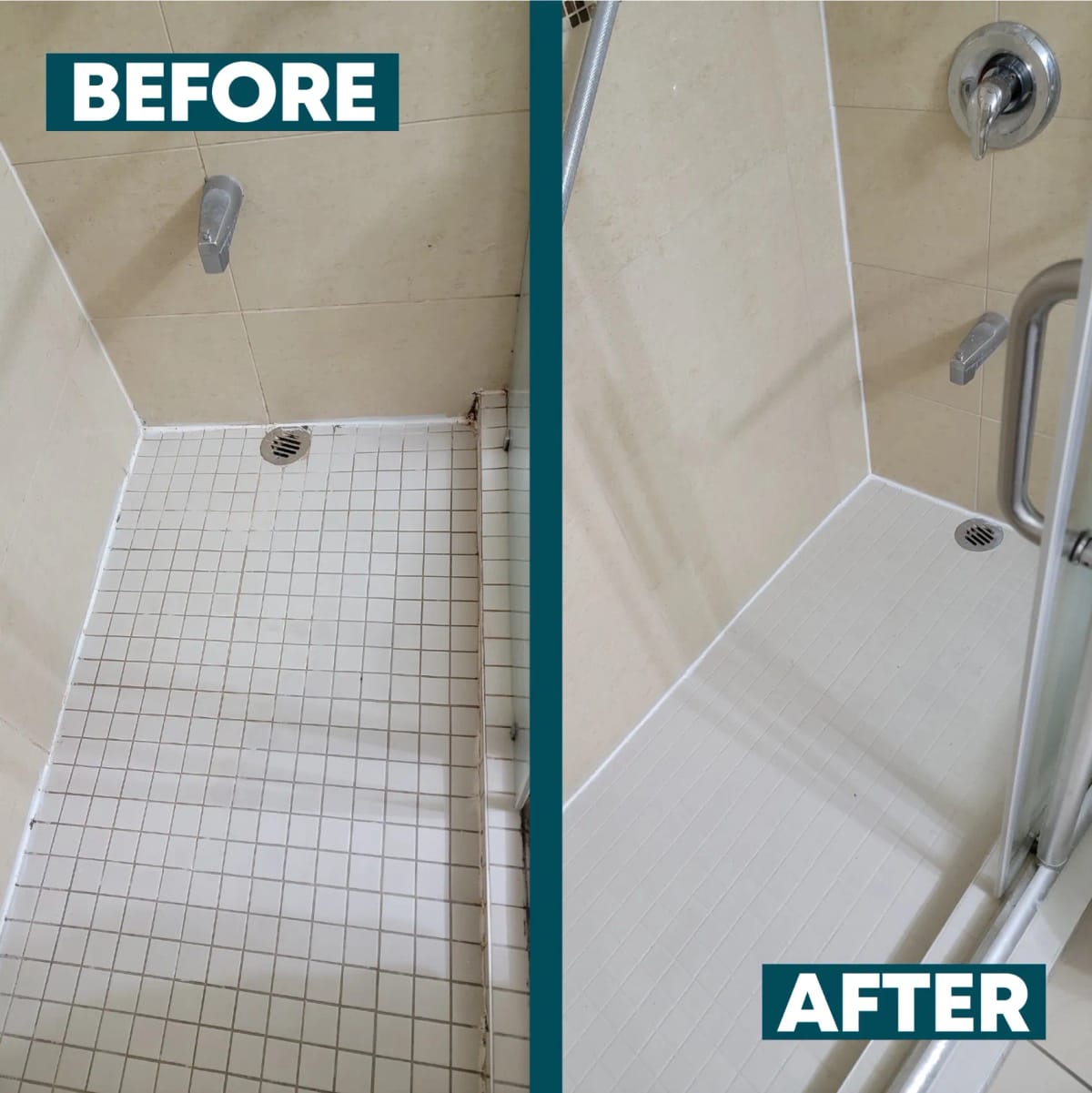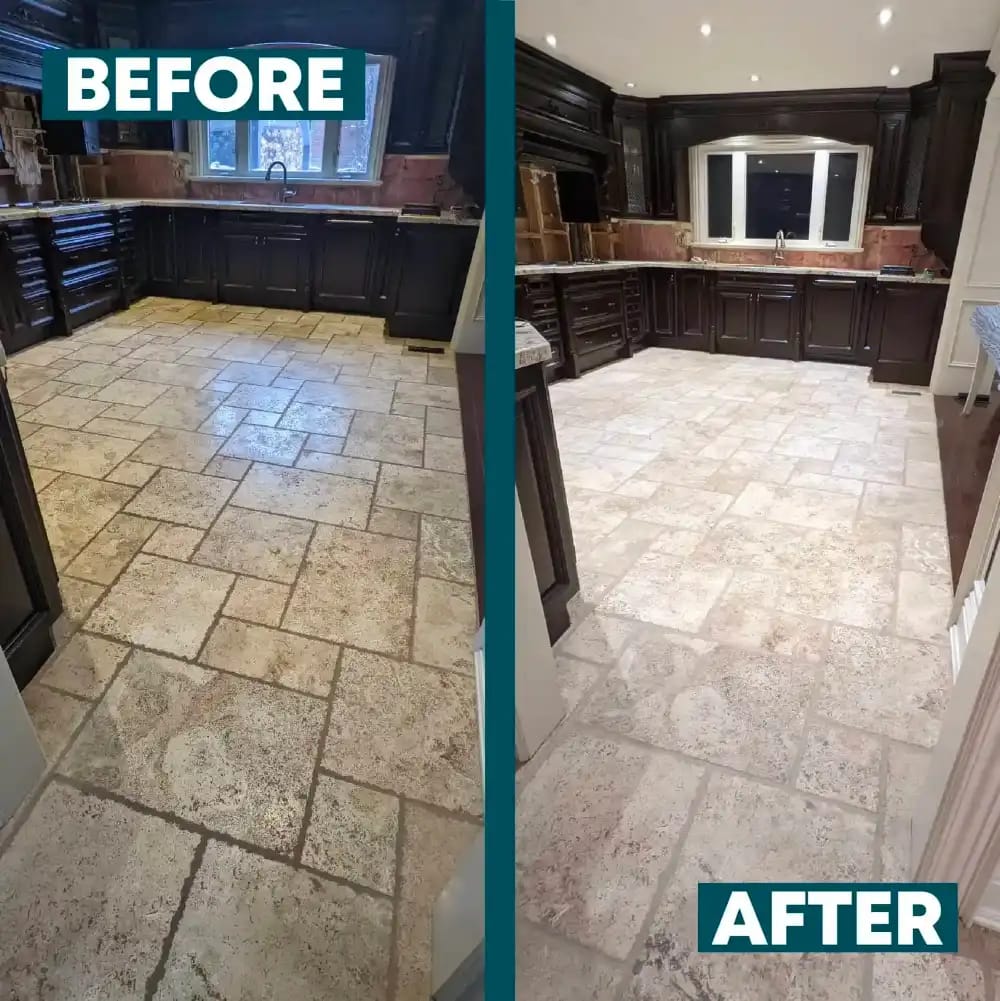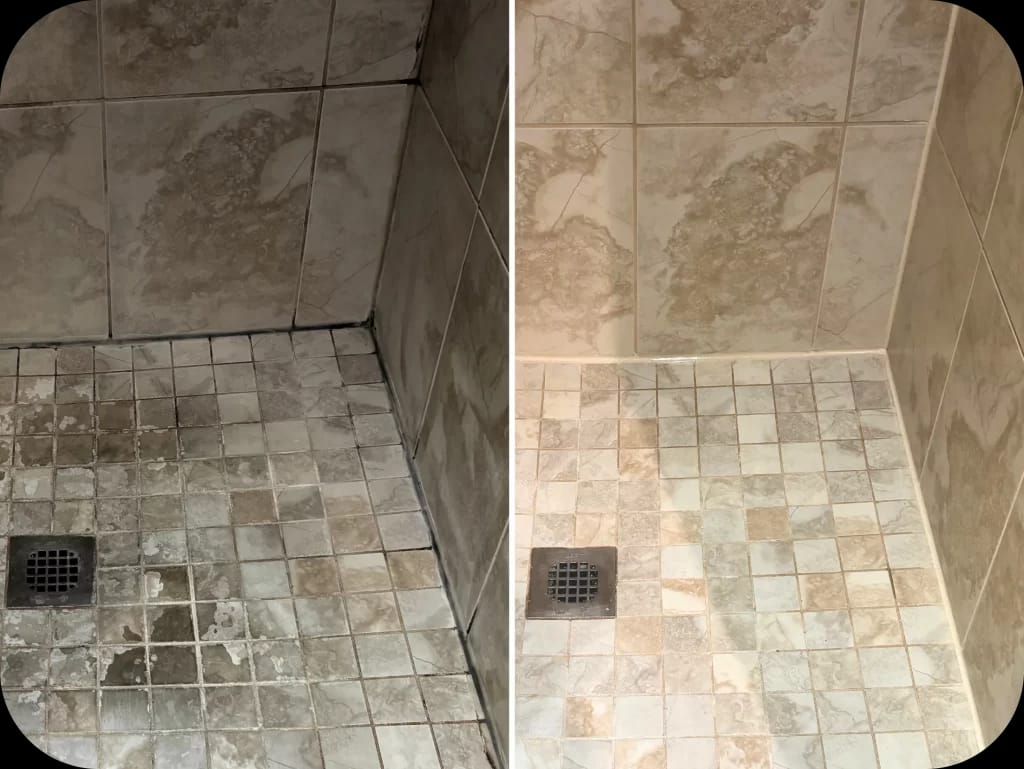
Yes. Stained grout can often be restored even when scrubbing has failed, without removing sound tile. The right treatment depends on what remains after cleaning: embedded buildup may respond to professional deep cleaning, persistent discolouration on intact grout may call for colour sealing, and cracks or missing sections need repair. More scrubbing cannot replace missing grout or fix failed caulking.
The tile may be fine. The grout is stealing the spotlight. At Team Grout, we start by separating an appearance problem from a material problem. That distinction matters because a cleaner, a sealer and a grout repair do different jobs. The aim is a refreshed appearance and a surface you can maintain, not a treatment chosen solely because the grout looks dark.
If staining keeps returning alongside dampness, odour, recurring cracks or mould, surface work may not address the cause. Have those signs assessed before paying for a cosmetic finish. For grout that is suitable for restoration, however, cleaning, targeted repairs and an appropriate finish can often improve the existing installation without replacing the tile.
What does grout restoration mean when cleaning has failed?
Grout restoration means treating the condition of the grout, not just washing its surface. The scope can include cleaning embedded buildup, filling cracks or holes, refreshing compatible grout with a colour sealer, and addressing failed caulking at nearby joints. It does not mean every stained joint needs to be removed and regrouted.
First, decide what you want changed. Do you want the original grout colour back, a more consistent colour, repaired joints, or protection for grout that already looks good? These are different outcomes. An assessment establishes which are realistic for your tile, grout and surrounding conditions.
Why does grout still look dirty after scrubbing?
Soil is trapped below the surface a household brush reaches
On a floor, grout lines can hold accumulated dirt and kitchen grease while the adjacent tile wipes clean. In a shower, soap scum and mineral buildup can collect around grout, corners and the base. A compatible professional cleaning process uses products selected for the material and mechanical brushing where suitable to lift buildup that routine wiping leaves behind.
The surface matters. A method suitable for a ceramic floor should not automatically be used on natural stone. Marble, limestone and travertine, for example, need stone-appropriate care rather than an acidic bathroom cleaner. Stronger is not necessarily better; matching the treatment to the material is the useful part.
The colour has changed, but the grout is still sound
If grout remains firmly in place but looks uneven after suitable cleaning, the remaining issue may be discolouration rather than removable dirt. Clear sealer does not hide that variation. A compatible grout colour sealer can create a more consistent finish and add stain resistance after the grout has been prepared. The existing tile can stay if it is sound and the proposed work is suitable.
The grout itself is damaged
Look closely along the line, not just at its colour. Pits, cracks, low spots and missing pieces interrupt the surface and can look like stubborn dark marks. As we explain in our guide to grout cleaning versus full grout restoration, cleaning intact grout and repairing deteriorated grout are different scopes. No amount of scrubbing fills a hole.
The dark area is at a failed shower joint
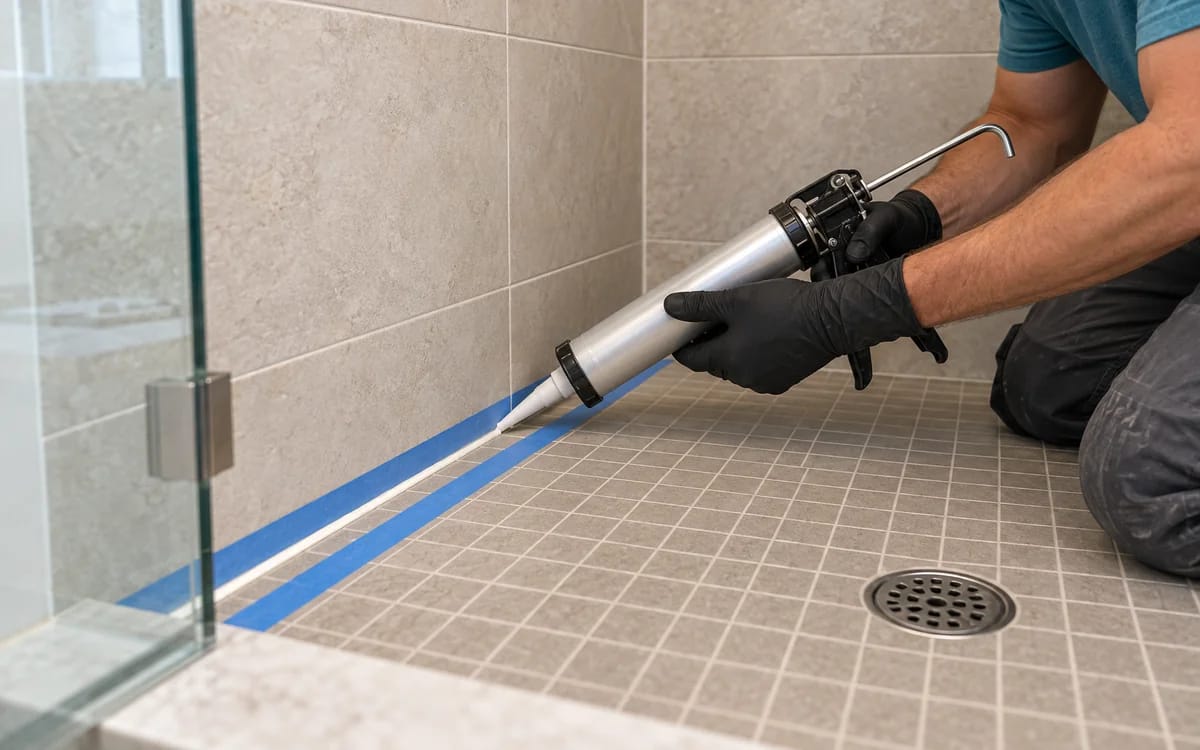
What looks like stained grout may be deteriorated caulking at a corner, tub edge or shower base. If silicone is peeling, separated or discoloured through its depth, cleaning its surface is not the same as restoring the joint. Failed material needs to be removed, the exposed joint cleaned and dried, and new caulking applied where appropriate. A fresh bead is not a fresh start if the failed caulk stays underneath.
Which treatment fits which condition?
You do not need to learn the technical terms before asking for help. You do need to know what the proposed work will do. These distinctions make it easier to judge whether a quote addresses the problem you can actually see.
| What you see | Treatment to assess | What it does not do |
|---|---|---|
| Intact grout darkened by dirt, grease or shower buildup | Professional deep cleaning, with suitable sealing if included in the scope | Does not rebuild cracks or missing grout |
| Intact grout with persistent, uneven colour after cleaning | Grout colour sealing after proper preparation | Does not fix loose grout or a moisture source |
| Sound grout whose existing appearance you want to keep | Clear penetrating sealing if the material is compatible | Does not conceal existing discolouration or waterproof the installation |
| Cracks, holes or missing sections | Targeted grout repair or regrouting, depending on condition | Cannot correct underlying movement or moisture by appearance alone |
| Peeling, gapped or deteriorated caulking | Complete removal and replacement of failed caulk | Does not repair hidden water damage |
A single room can need more than one treatment. For instance, sound floor tile may need deep cleaning while selected grout lines need repair. In a shower, cleaning the tile without dealing with failed caulking can leave an important part of the job undone. Getting the tile, floor grout and wet-area joints right is less glamorous than choosing a new grout colour, but it matters when you want the result to last.
How we assess stained grout before recommending work
Our approach is to inspect the surface, the joint and the source of the change. That keeps a cleaning job from being mistaken for a repair job, or a surface stain from being treated as proof of a hidden problem.
- Identify the area and material. Is it a shower wall, tiled floor, backsplash or stone surface? The tile or stone and any existing finish affect what cleaning and sealing methods are appropriate.
- Examine the grout line. We look for sound joints, persistent colour variation, pits, cracks and missing sections. A close-up often tells us more than a photo of the entire room.
- Check adjoining joints. At showers and tubs, caulking condition matters. Gaps, separation or material that has deteriorated through its depth may change the recommended scope.
- Ask whether the problem returns. Repeated cracks, recurring mould, persistent odours or moisture outside the expected wet area deserve attention beyond a surface finish.
- Define the intended result. Do you want cleaning without a colour change, a more uniform grout colour, repaired joints, or guidance on appropriate protection?
- Specify the work and aftercare. The quote should distinguish cleaning, repairs, clear sealing, colour sealing and caulking replacement, then explain drying, curing and return to use for the selected treatment.
This is why photos help but do not always settle the question. A wide view shows the extent of the area; a close-up helps show joint condition. A video review or on-site visit can be more useful when the grout’s integrity, moisture conditions or surrounding material cannot be judged from still images.
What happens during cleaning or restoration?
If the grout is intact but dirty
We choose a cleaning method for the surface and buildup. On suitable tile and grout, our technicians use machine-powered bristle brushes and appropriate products to lift embedded dirt. For a shower deep clean, the scope can include tile, grout, corners, the shower floor and glass, with rinsing and extraction. A clear sealer may follow where appropriate and included. The point is to remove buildup before deciding whether any remaining colour difference needs another treatment.
Steam cleaning is another option for suitable, sound shower surfaces. Vapour, brushing and extraction can address accessible buildup, but steam cannot fill cracked grout or remove mould embedded within failed silicone. Those conditions need a repair or replacement assessment.
If the grout is stained but sound
After cleaning and suitable preparation, a grout colour sealer can refresh or change the colour of compatible grout lines. Our colour-sealing treatment uses a water-based, polymer-modified grout colour sealant. This is a finish for grout, not a reason to coat every surrounding tile or stone surface. It can make uneven lines look more consistent, but it should not be used to hide loose material or an unresolved moisture problem.
If you like the existing grout colour and it is already in good condition, clear penetrating sealing may be the better protection discussion. It helps suitable absorbent surfaces resist staining while preserving their appearance. It does not erase a dark line. Like a raincoat, protection works best when you are protecting the right thing, not asking it to become a repair kit.
If the grout or caulking has failed
Our grout restoration work can address cracks and holes line by line, followed by a compatible colour-sealing finish where appropriate. The existing tile can often remain when it is sound. Where grout is broadly loose, crumbling or repeatedly cracking, the assessment needs to establish whether more extensive regrouting or investigation is appropriate rather than promising a surface treatment will hold.
For caulking replacement, the old silicone is removed completely. The exposed joint is scraped, cleaned, disinfected and dried before a new waterproof, mildew-resistant bead is applied. Preparation matters here: new material applied over failed caulk may look tidy without giving the joint a proper fresh start. If you are weighing both issues in a shower, our article on cracked shower grout and deteriorated caulking explains why the two need separate attention.
What can restoration achieve, and where does it stop?
The achievable result depends on the condition. Deep cleaning can remove suitable buildup and reveal the grout’s existing appearance. Colour sealing can give compatible, intact grout a more consistent colour and stain-resistant finish. Repairs can fill accessible cracks and holes where restoration is suitable. Caulking replacement can renew a deteriorated joint. These options may let you keep tile that is still sound rather than replace it for an appearance problem.
They are not substitutes for fixing a hidden leak, failed underlying waterproofing or ongoing movement. A surface treatment addresses the surfaces we can access; it does not establish what is happening behind tile. Clear sealing is not waterproofing, and a mould-resistant bead does not mean mould can never return. If there is persistent odour, recurring visible mould or cracking that reappears, the next question is why, not which finish will cover it.
Before you buy new tile, get an answer about the tile you already own. But if tiles are loose or the surrounding assembly has a confirmed problem, keeping the existing surface may not be the right goal. The assessment is where those limitations should be discussed, before a quote becomes a commitment.
Real work behind the recommendation
Homeowners have described results from different scopes, which is useful because stained grout rarely has one universal fix. In a Google review, Nick G described a shower restoration that included tile cleaning, grout filling and re-caulking: “The tiles shine, the grout was filled in and it was re-caulked.” That is a combined restoration, not a claim that scrubbing alone produced the result.
Francis Hsue described having a main shower cleaned, sealed and re-caulked. Joanne Triska described using grout colour treatment to update an older bathroom floor without demolition. Their projects show why it pays to name the work beneath the finished appearance. A cleaner floor, refreshed grout colour and renewed caulk may all look like a bathroom refresh, but they solve different conditions.
How long will assessment, work and curing take?
Assessment and scheduling: Start by describing the area and concern. A free video quote or an on-site assessment may be suitable, depending on the condition, location and appointment availability. We review the enquiry, follow up about the appropriate format and arrange the appointment with you; sending a request is not the same as having a confirmed visit. If you request a written quote, it begins a review and follow-up, not an instant exact price based on a few details.
Work duration: Most residential shower deep cleans are described as taking about half a day. Grout restoration is usually described as a one-day job, and most residential full shower restorations are also described as one-day work. Caulking replacement alone can take a few hours. The size, number of areas, material and agreed repairs determine the schedule for your property; a large floor or several rooms should not be planned around a single-shower estimate.
Curing and return to use: Finishing the visible work does not always mean the area is ready to use. For standard tile-and-grout cleaning with the clear sealer described in our cleaning process, the guidance is to avoid foot traffic for four hours. A separate clear-sealing process calls for at least 12 hours of drying before application, potentially about four hours with air movers, followed by further drying after application. These are different service sequences, not interchangeable instructions. A shower that has been re-caulked is typically reusable the next day, subject to the sealant’s specified cure. For colour sealing, combined restoration and other treatments, follow the technician’s instructions for the actual products and scope.
Ask for the expected work window and return-to-use instructions with the proposed treatment. It is far easier to plan around a curing period before the appointment than to discover afterward that the shower or floor needs to remain unused.
What will it cost, and what should you compare?
The assessment and quote are free; the restoration price depends on the proposed work. Relevant factors include the area or grout-line length, tile or stone type, amount of buildup, cracks or missing sections, caulking condition, number of spaces, access and chosen finish. Cleaning intact grout is not the same scope as repairing grout, colour sealing and replacing shower caulking.
Two quotes. Same service name. Very different work underneath. Before comparing totals, ask:
- Which floors, walls, shower sections or other surfaces are included?
- Is the work cleaning only, or are grout repairs part of it?
- Is the finish a clear sealer, a grout colour sealer, or neither?
- If caulking is included, will failed material be fully removed and the joint prepared?
- What drying, curing and return-to-use instructions apply?
- What visible problem should improve, and what is outside the scope?
A written quote is most helpful when it answers what work is proposed and what that work will cost, rather than giving an unexplained number. Our guide to what to expect from a written tile and grout quote offers more questions to bring to that conversation.
What do you need to do before and after the work?
You do not have to diagnose the grout or select a sealer. To prepare for an assessment, tell us the room or area, your location, approximate floor area or number of showers, what you have tried and whether you see cracks, gaps, recurring mould or moisture. If you have them, send a wide photo and close-ups of the affected grout and caulking. Photos are supporting information; they may help us prepare, but a video or on-site review may still be needed.
When an appointment is arranged, have the affected area accessible so the joints, tile and adjoining surfaces can be seen. Before work begins, clear personal items from the immediate area and tell the technician about any previous sealer, colour treatment or repair you know about. We handle the assessment, the agreed preparation and treatment, and the instructions for caring for the finished surface.
Afterward, respect the stated curing time and use cleaners appropriate for the material and finish. Rinse away routine cleaner residue, keep shower surfaces ventilated and avoid using a damaged joint as though it has been repaired. If a problem returns quickly, especially cracking, moisture or visible mould, report the pattern rather than simply scrubbing harder. Getting a floor or shower joint treated correctly now can spare you another round of guesswork later.
Best practices when grout will not come clean
- Pause before increasing force or chemicals. If a compatible cleaning attempt has made little difference, inspect the grout for damage and consider a professional assessment instead of repeating the same approach more aggressively.
- Keep cleaning and restoration separate. Embedded dirt, lasting discolouration and missing grout require different answers.
- Check the edges of wet areas. Peeling caulk at a corner or tub edge is not fixed by cleaning the grout beside it.
- Match products to the surface. Avoid vinegar, lemon, descalers and acidic bathroom cleaners on acid-sensitive stone such as marble, limestone and travertine.
- Do not mix cleaning chemicals. Use products according to their instructions rather than improvising a stronger treatment.
- Think about protection after preparation. Clear sealing can help suitable surfaces resist staining; colour sealing can refresh compatible grout. Neither is a substitute for repairing failed joints or investigating persistent moisture.
Frequently asked questions
Can stained white grout look white again without regrouting?
It may. If the darkness is removable buildup and the grout is intact, professional cleaning may bring back a cleaner appearance. If the colour remains uneven on sound grout, a compatible colour sealer may create a more consistent white finish. If the grout is missing or crumbling, it needs a repair assessment rather than a coating alone.
Will a clear sealer remove old grout stains?
No. Clear sealing preserves the existing look while helping suitable porous material resist staining. Persistent discolouration needs an assessment for cleaning or colour sealing. The grout must be suitable and properly prepared before either finish is applied.
Is colour sealing the same as regrouting?
No. Colour sealing coats compatible grout lines to refresh their appearance and add protection. Regrouting replaces grout material. A grout line with cracks or holes may need repair before any colour treatment; broadly failing grout may need a different scope.
Can steam cleaning fix grout that is cracked or missing?
No. Steam cleaning can address suitable accessible buildup on sound surfaces. It cannot rebuild a joint or replace deteriorated silicone. Those conditions require a repair or caulking replacement assessment.
What if the black staining keeps coming back in my shower?
Look at the location and material. Staining on accessible grout, mould embedded in old silicone and recurring moisture are not the same problem. Failed caulking may need complete replacement, while repeated visible mould or persistent odour may warrant further investigation. For more on recurring wet-area staining, read why mould keeps returning to a shower.
Should I replace the tile if the grout looks permanently dirty?
Not automatically. Sound tile can often remain while grout is professionally cleaned, repaired or colour sealed, depending on its condition. If the tile is loose or there is an underlying moisture or installation problem, an assessment should identify that before you pay for a surface finish.
How can I tell whether a grout restoration quote covers everything I need?
Check that it names the surfaces, states whether cleaning and repairs are included, identifies the finish, addresses deteriorated caulking if present, and gives curing and aftercare instructions. Ask what the treatment will not fix. A quote for cleaning alone should not be read as a promise to repair cracked grout.
Find out what your grout actually needs
When scrubbing has failed, the useful next step is an assessment, not another guess at a stronger cleaner. Tell Team Grout where the problem is, approximately how much area is affected, what result you want and whether you see damage or recurring moisture. Add photos if you have them. We will follow up to arrange a free video quote or on-site assessment where suitable and confirm the appointment details. The assessment helps answer what your property needs; the quote then sets out the proposed work and cost.
Before you replace your tile, find out what can be restored. That answer may be a focused deep clean, grout repair, a more consistent colour finish or properly replaced caulking. We help Toronto and GTA homeowners make that decision with a clear scope, realistic curing guidance and an understanding of what the finished surface will need from them afterward.