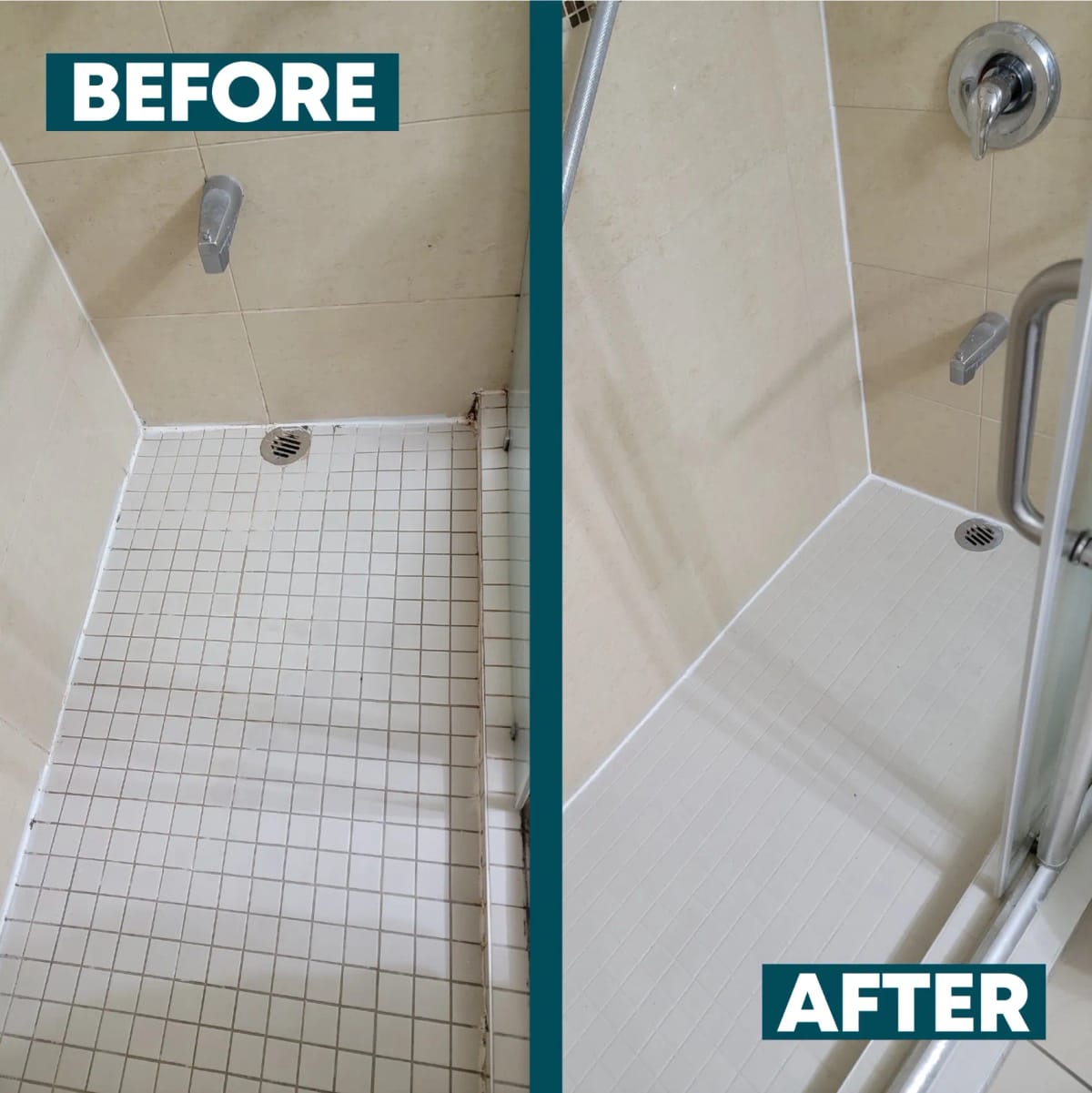
Team Grout repairs cracked shower grout and replaces mouldy, deteriorated caulking in Toronto and the GTA. If the tile is sound, the work may be limited to grout repair and removal and replacement of failed caulk. If the shower also has heavy buildup or uneven grout colour, a broader restoration may make more sense. A free video quote or on-site assessment, depending on suitability, location and availability, is the way to establish what your shower needs before you commit to work.
Cracked grout and mouldy caulk are different problems. Grout fills joints between tiles; caulking seals transitions such as corners and the joint where a wall meets a tub or shower base. Cleaning can remove buildup from suitable surfaces, but it cannot fill a missing section of grout or restore a bead of silicone that has separated. The tile may be fine. The grout is stealing the spotlight.
Team Grout provides grout restoration, shower caulking replacement and combined shower restoration. That range matters when both symptoms appear together: the right quote should address the damaged materials, not simply promise a cleaner-looking shower.
What cracked grout and mouldy caulking can tell you
A dark line is not automatically a crack, and a stained caulk bead is not automatically a hidden leak. The useful first question is whether the material is still sound.
Grout that is dirty versus grout that is damaged
Sound grout can collect soap scum, mineral deposits and other buildup. Professional shower cleaning is intended for grout that remains intact beneath that buildup. Damaged grout has a different problem: a line may be cracked, pitted, crumbling or missing in places. Those gaps can hold residue and make the joint look dark even after cleaning. A brush cannot put missing grout back.
When repair is suitable, grout restoration addresses affected lines and fills cracks or holes before an agreed finish is applied. Team Grout also offers grout colour sealing where compatible grout needs a more consistent appearance. That is distinct from clear sealing, which preserves the existing colour on suitable materials. Neither finish substitutes for repairing a physical gap.
Surface staining versus failed caulking
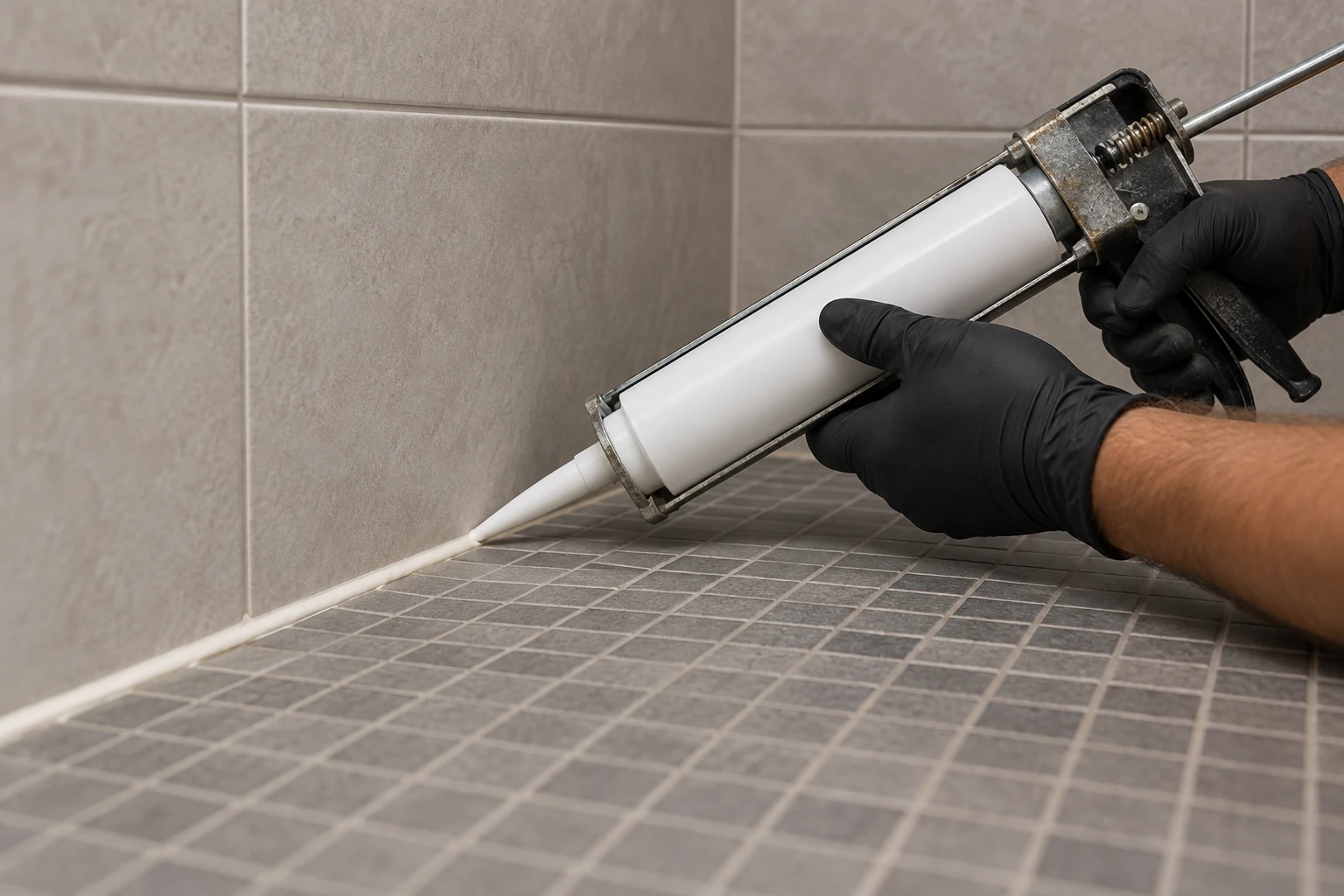
Caulking can discolour, peel, crack or pull away from an adjoining surface. Mould that is embedded in old silicone generally calls for replacement rather than another round of surface cleaning. A fresh bead is not a fresh start if the failed caulk stays underneath. Proper replacement means removing the old material, preparing and drying the exposed joint, then applying and tooling new caulking.
These distinctions matter beyond appearance. A well-prepared joint gives the new material an appropriate surface to bond to, while covering a separated bead can leave the original failure in place. Similarly, a refreshed shower floor should not distract from missing grout at the wall or failed caulk around its perimeter. Getting each surface and joint treated for its actual condition helps avoid having to revisit the same visible problem shortly after the work.
Which service fits the condition?
You do not need to diagnose the shower before calling. This comparison gives you a practical way to understand the options an assessment might produce.
| What you can see | Service to discuss | What it does not do |
|---|---|---|
| Built-up residue on intact tile and grout | Shower deep cleaning, with a compatible sealer if included in the agreed scope | Cleaning does not rebuild missing grout or replace failed caulk. |
| Cracks, pits or missing sections in grout lines | Targeted grout repair or broader grout restoration | A surface finish alone does not fill damaged joints. |
| Sound grout with uneven or unwanted colour | Grout colour sealing, if the material is compatible | Colour sealing does not fix loose tile or a concealed moisture problem. |
| Peeling, separated or mould-affected caulking | Complete removal and replacement of the affected caulk | A new surface bead does not correct a leak behind the shower assembly. |
| Several of these conditions together | Combined shower restoration with the necessary cleaning, repairs, finishing and recaulking | Accessible surface work does not replace investigation of hidden damage. |
If you like the grout colour and the material is suitable, ask whether clear protection is appropriate. If you want a more consistent grout colour, ask about colour sealing. Clear sealing helps suitable porous surfaces resist staining; it is not waterproofing, and neither treatment makes a shower immune to future mould. For a fuller look at grout appearance without removing sound tile, see our guide to refreshing old bathroom grout.
How a shower repair is assessed and carried out
Team Grout’s working principle is to clean what needs cleaning, restore what needs restoring and discuss protection where it suits the material. The order and extent of the work depend on the shower’s condition and the products selected. A combined project can involve the following stages; a caulking-only job would not automatically include every one.
- Assess the visible condition. We review the grout, caulk, tile, shower floor, corners and other joints. We ask where cracking or visible mould keeps returning and look for signs that surface restoration may not be enough. This is where the question changes from “Can someone clean it?” to “Which material has actually failed?”
- Agree on a scope. The proposed work should identify which joints and surfaces are included, whether grout repair is needed, whether caulk will be removed, and whether any sealing or colour treatment is suitable. A homeowner with sound grout and one failed joint may not need a full restoration.
- Prepare the area and remove failed material. Surrounding areas are protected as appropriate. For caulking replacement, old silicone is removed completely from the joints being treated, and the exposed surfaces are scraped and cleaned. Preparation is part of the repair, not an optional detail hidden under the new bead.
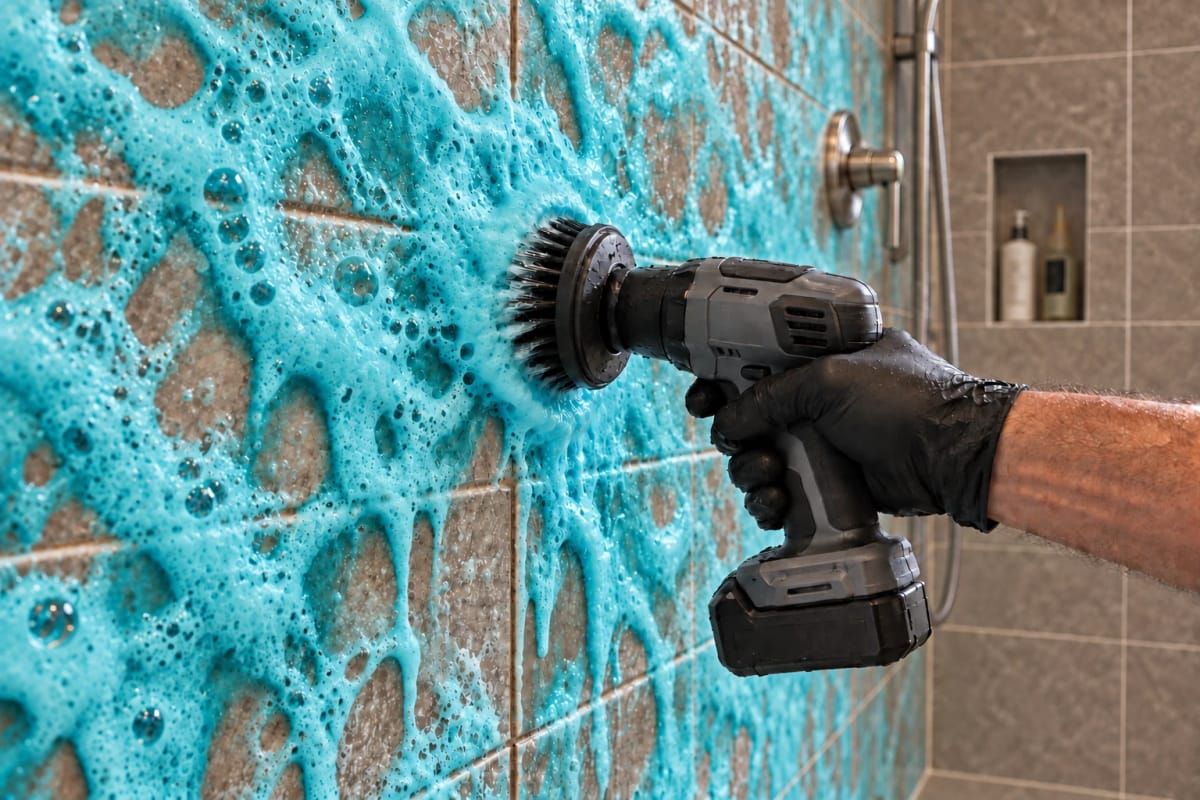
- Clean and treat accessible surfaces. Depending on the approved scope, work may address soap scum, calcium buildup, dirt and visible mildew or mould on accessible surfaces. Team Grout uses dedicated treatments as part of preparation where appropriate, followed by the necessary cleaning and rinsing before finishing. Product instructions govern compatibility and the sequence of treatment, drying and finishing.
- Repair suitable grout and dry the joints. Cracks or missing sections are addressed where repair is appropriate. Joints must be prepared and sufficiently dry for the selected finishes. If movement or moisture is continuing to damage them, the cause may need investigation before a lasting surface result is possible.
- Finish and explain aftercare. The agreed work may include new waterproof, mould-resistant caulking and a compatible grout finish. The technician explains what was completed and gives the job-specific instructions for curing, cleaning and returning the shower to use.
The finish is what you see. The preparation is what you are paying for. That applies to a shower wall, a tiled floor and the narrow caulk line most people only notice once it starts to fail.
When repair may not be enough
Keeping sound tile in place can produce a refreshed appearance without replacing the entire tiled surface. But an attractive finish cannot establish that everything behind the tile is dry or intact. Surface treatment addresses accessible conditions; it does not remove hidden mould, repair a concealed leak or restore failed underlying waterproofing.
Tell the assessor if you have noticed loose or moving tiles, grout that repeatedly cracks in the same spot, persistent musty odours, mould that quickly returns, soft or swollen nearby finishes, or water showing up outside the shower. Those observations may point to a moisture source or assembly problem that needs further investigation by an appropriately qualified professional. It is better to identify that limitation before paying for a cosmetic finish over a recurring issue.
There is a useful distinction between protecting a result and claiming to waterproof an entire shower. Compatible clear or colour sealers can help with suitable surface-care goals, but they do not replace the shower’s underlying waterproofing. Newly installed tile may also merit a discussion about appropriate protection, although not every material needs sealing. The assessment should establish what is suitable rather than prescribe the same treatment to every bathroom.
How long will the assessment, work and curing take?
Start with an enquiry, not an assumption that a form submission is a confirmed appointment. Team Grout offers a free video quote or an on-site assessment when suitable. Location, availability and how much of the condition can be established remotely affect which option is offered. Once the assessment method and appointment are arranged and confirmed, the visible condition can be reviewed and a proposed scope and price explained. Scheduling for the actual work depends on availability; there is no universal wait time we can responsibly promise.
The service-specific work estimates are more useful than a blanket “same-day” claim:
- Caulking replacement alone: The removal, preparation and replacement work is described as taking a few hours, depending on joint length and condition. The shower is typically reusable the next day, subject to the selected sealant’s cure instructions.
- Shower deep cleaning: Most residential showers are described as taking about half a day. Any applied sealer must cure before the shower gets wet.
- Combined shower restoration: Most residential showers are described as one-day jobs when the confirmed scope and tile condition allow it. Curing follows the work, so a one-day job does not necessarily mean same-day shower use.
Ask for the exact return-to-use instruction for your job. The sealant, sealer, amount of repair and condition of the surfaces can affect the schedule. A curing time given for a standard floor sealer, for instance, should not be assumed to apply to new shower caulk or a combined shower treatment. Plan for another bathing option until the technician confirms when the repaired shower can get wet.
What will it cost, and what should the quote say?
There is no reliable single price for “cracked grout and mouldy caulk” without a defined scope. The quote depends on shower size, the length and condition of the joints, how much grout needs repair, the extent of buildup, access, and whether cleaning or sealing is included. An isolated caulking replacement is different work from repairing grout across a shower and finishing the entire wet area.
Two quotes. Same service name. Very different work underneath. Compare proposed work using these questions:
- Which walls, floor areas, corners, niches, ledges and base or tub joints are included?
- Will failed caulk be removed completely, or is the quote only for applying a new bead?
- What preparation, cleaning, treatment and drying of the exposed joints are included?
- Which grout lines need repair, and how will missing or cracked material be addressed?
- Is the proposed finish a clear sealer, a grout colour sealer, or neither? What is it intended to improve?
- What remains outside the scope, particularly if there may be hidden moisture or loose tile?
- What are the work duration, curing instructions, aftercare and any applicable workmanship terms?
A written-quote request made with a short description and photos is a request for review and follow-up, not a promise of an instant exact price from limited information. The assessment answers, “What does my property need?” The quote answers, “What work are you proposing, and what will it cost?” If two proposals are priced differently, the answers above help you see whether you are comparing the same work.
What homeowners have reported
Real customer experiences are helpful because they describe work actually done, not just a service label. In a Google review, Nick G described a shower restoration in which “the grout was filled in and it was re-caulked.” That is a relevant example of repair and caulking being handled together, although it does not establish what another shower will need.
Francis Hsue wrote in a Google review that Gabriel “cleaned, sealed and re-caulking our main shower room,” and described the work as professional. Cynthia C reported that Alexia completed recaulking and a bathroom deep clean, and appreciated the care taken to do a proper job. These accounts show why it is worth asking whether a proposal covers just one visible symptom or the combination present in your shower. Reviews cannot diagnose your grout or guarantee a particular outcome, but they do show examples of the services working together.
What you need to do before and after the visit
For the initial request, have your name, contact details, location and a short description ready. Mention whether the grout is cracked or missing, where caulk is peeling or mould-affected, whether you have noticed water outside the shower, and whether the problem has returned after previous work. If the website form asks for a service, choose the closest option, such as shower restoration or caulking, and describe the combination in the notes. You do not need to learn the technical terms. You need to know what the work will do.
Photos can help us prepare: a wide view shows the shower layout, while close-ups show the grout and caulk condition. Team Grout’s shower booking information allows up to five photos. They are supporting information, not a guaranteed substitute for a video or on-site review. If the condition is difficult to judge from images, expect a follow-up discussion before the scope is confirmed.
For an on-site visit or the work itself, clear toiletries, mats and loose items from the shower and make the affected joints accessible. Have any relevant observations ready, particularly repeated cracking, odours or moisture outside the enclosure. We handle the assessment and the technical work included in the accepted quote; you should receive an explanation of the recommended scope and price before deciding to proceed. Afterward, keep the shower dry for the stated curing period and follow the product-appropriate cleaning guidance. Report recurring symptoms rather than covering them with another layer of caulk.
Toronto and GTA availability
Team Grout’s primary service focus is Toronto, including downtown, North York, Scarborough and Etobicoke. Enquiries also come from surrounding GTA communities such as Mississauga, Brampton, Vaughan, Markham, Richmond Hill, Pickering, Ajax, Oakville and Milton. On-site assessment availability is not identical in every location, so include your area when asking whether a video quote or visit is appropriate.
Frequently asked questions
Can cracked shower grout be repaired without removing the tiles?
Often, yes, when the existing tile is sound and the grout damage is suitable for surface repair. A technician can assess which lines need attention. Loose tiles, repeated cracks or signs of an underlying moisture problem may call for investigation beyond grout restoration.
Will cleaning remove mould from old silicone caulking?
Cleaning can address accessible surface buildup, but mould embedded within deteriorated silicone generally requires the old caulk to be removed and replaced. Surface work cannot confirm that hidden mould behind tile has been removed.
Should I recaulk over the existing bead?
Not when the existing caulk has failed. New material applied over peeling or separated silicone leaves the failed joint underneath. The replacement service removes the old caulk, cleans and dries the joint, then applies and tools a new bead.
Do I need both grout repair and caulking replacement?
Only if both materials need work. Intact grout beside failed caulk may call for caulking replacement alone. Cracked grout with sound caulk may call for grout repair. When damage, buildup and failed caulk overlap, combined restoration may be the more coherent scope.
Does sealing make shower grout waterproof?
No. A compatible sealer may help suitable grout resist staining or refresh its appearance, depending on the treatment chosen. It does not make the entire shower waterproof or repair a failed waterproofing layer behind the tile.
When can I use the shower again?
For caulking replacement, next-day use is typical but depends on the sealant’s specified cure. A combined restoration may have different requirements for its caulk and sealer. Follow the technician’s job-specific instruction rather than assuming that finishing the work means the shower can immediately get wet.
Can I get an exact price from photos?
Photos help show the layout and visible damage, but they may not reveal how sound a joint or tile is. A written-quote request leads to review and follow-up; a video or on-site assessment may be needed before an accurate scope and price can be provided.
What if the mould or cracks keep coming back?
Tell the assessor where and how often the problem returns. Repeated cracking, persistent odours and recurring mould can indicate a moisture or movement issue that surface repair alone cannot resolve. Further investigation may be necessary before deciding whether restoration is appropriate.
Get a clear answer before replacing the tile
A refreshed shower may be possible while keeping sound tile in place, but the useful first decision is not which finish to buy. It is whether the shower needs cleaning, grout repair, caulking replacement, a combination, or investigation beyond surface work.
Request a free video quote or on-site assessment through Team Grout, subject to suitability, location and availability, or call +1 289-277-0228. Share your location, the affected areas and any photos you have. We will follow up to arrange and confirm the appropriate assessment, then explain the proposed work, price and return-to-use guidance so you can decide with a clear picture of what happens next.