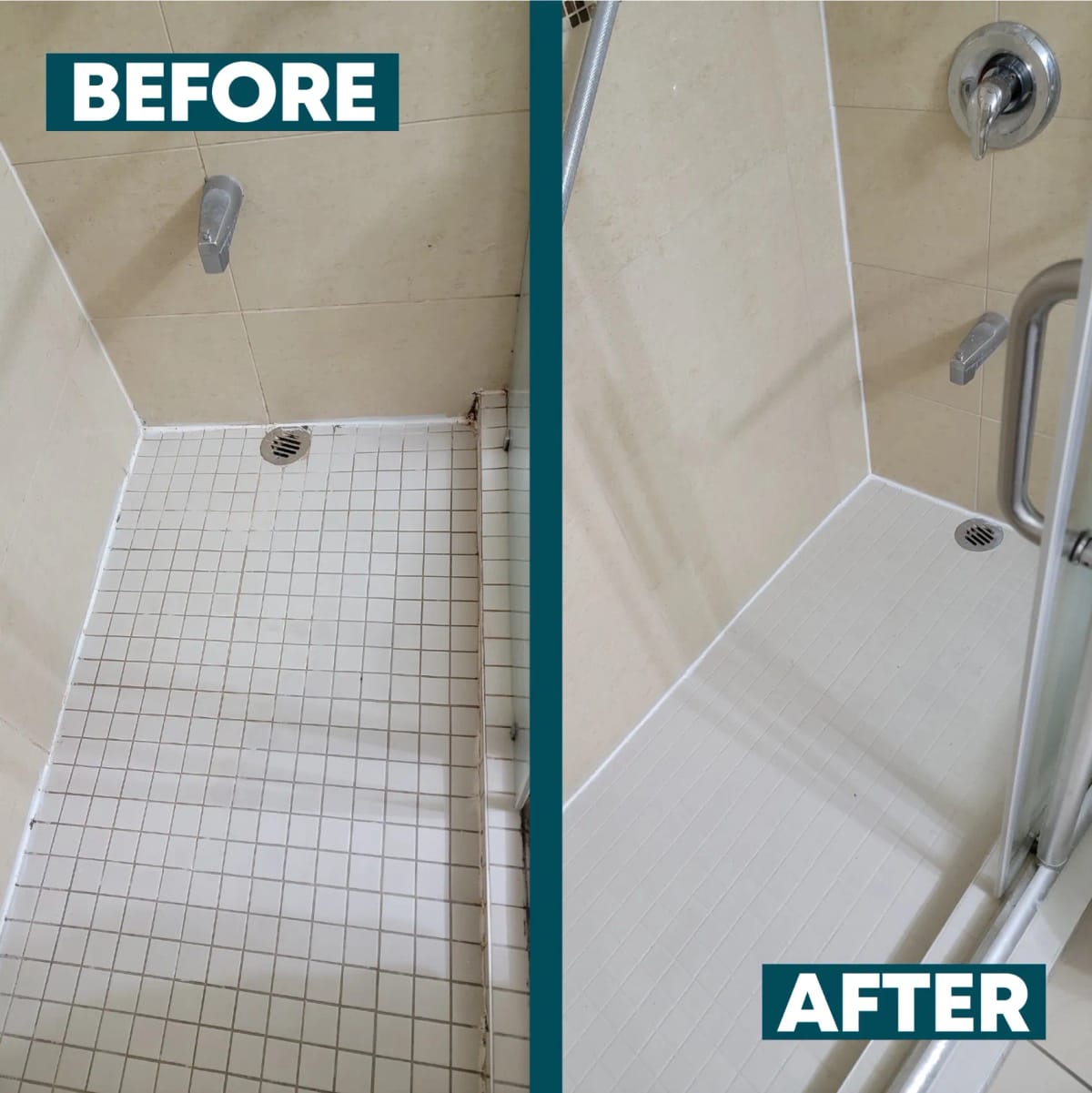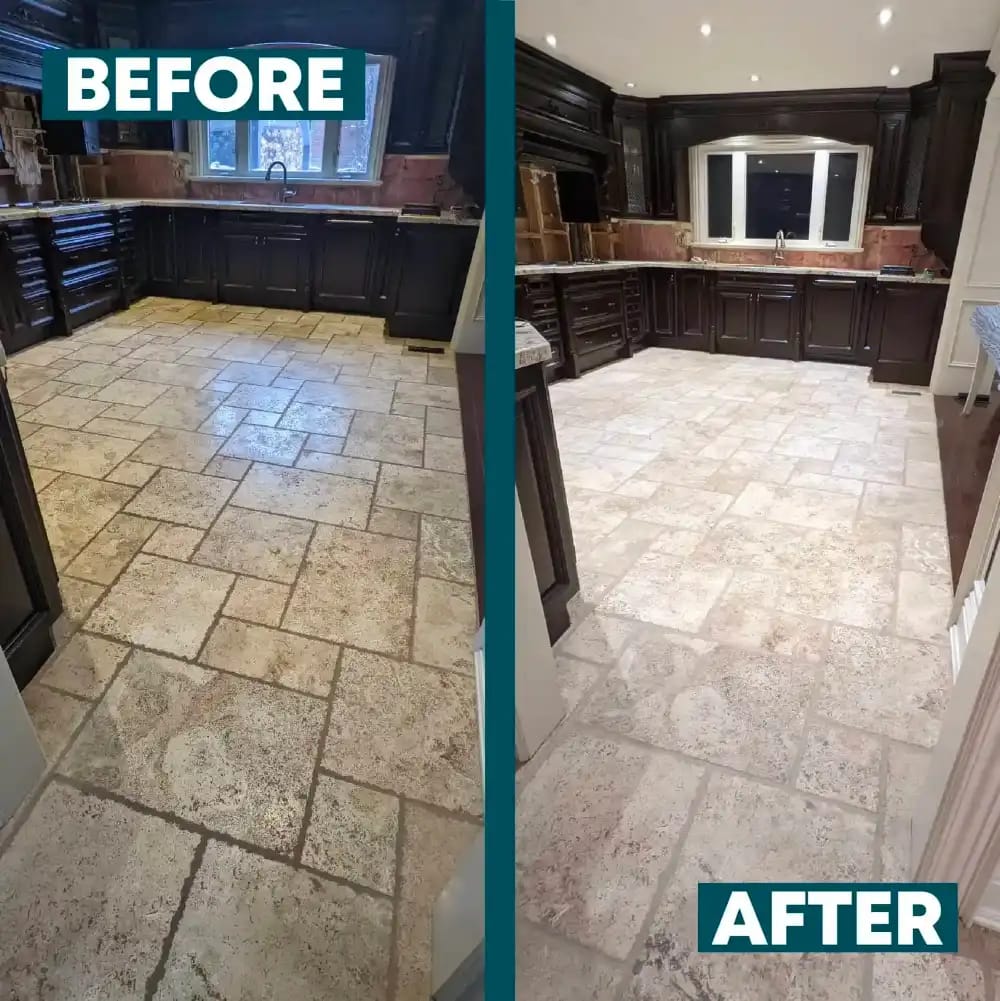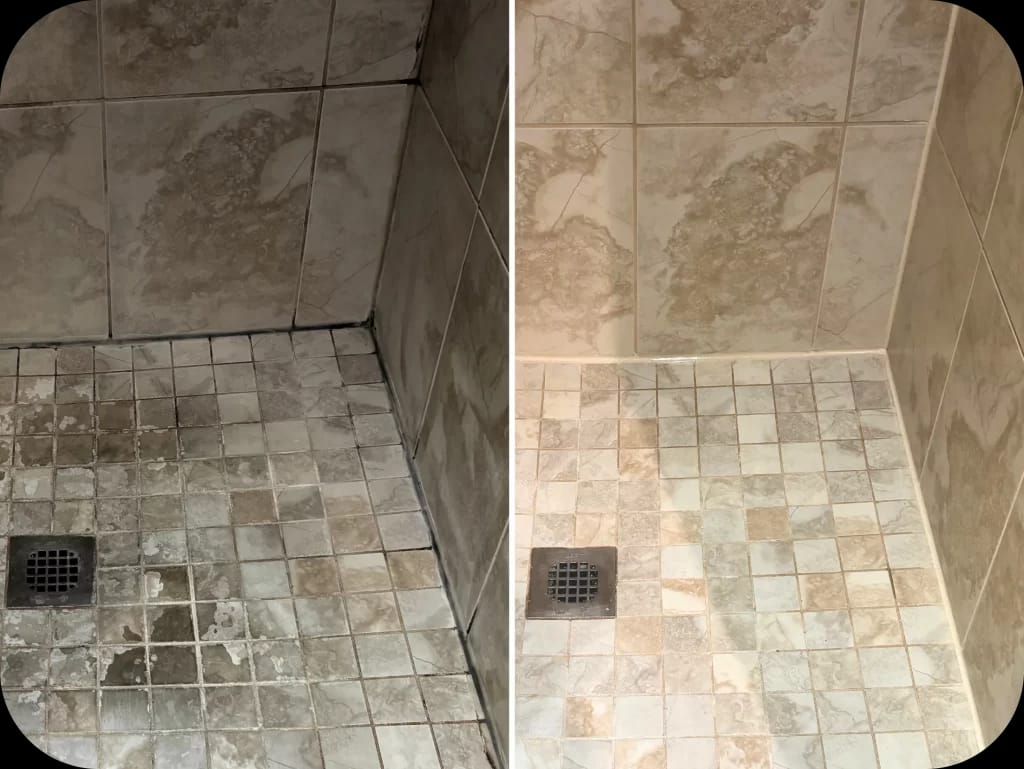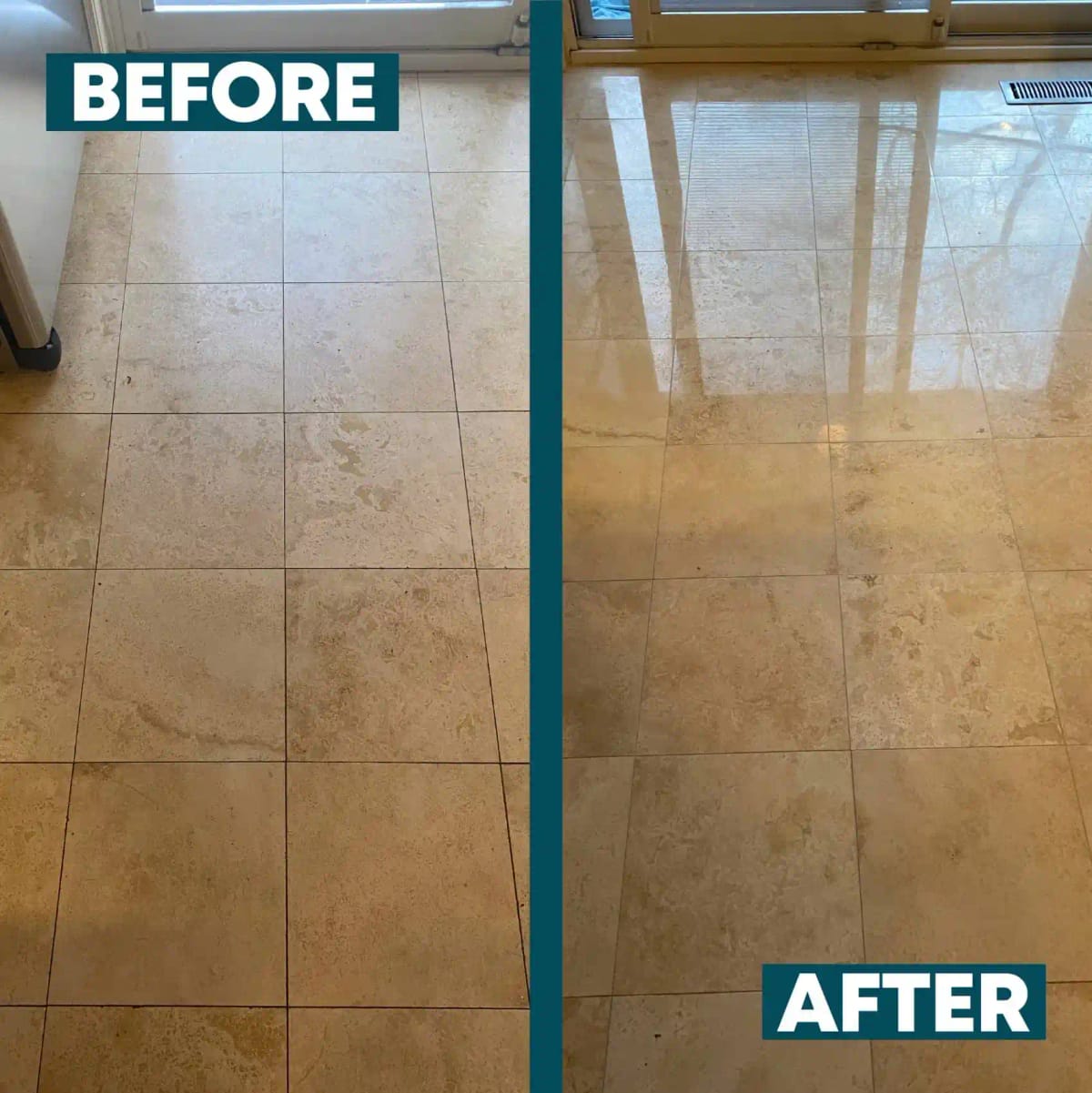
If your grout is dark but solid, professional cleaning may be enough. If it has cracks, holes or missing sections, it needs repair rather than another scrub. If the grout is sound but its colour remains uneven after cleaning, colour sealing may be the better way to refresh its appearance. Team Grout uses the condition of the joints, not just their colour, to distinguish cleaning from restoration.
The tile may be fine. The grout is stealing the spotlight. In a shower, check the caulking too: a split or peeling bead is a separate problem that cleaning cannot fix. You may need cleaning, a focused repair, caulking replacement or a combination, not necessarily a full restoration.
The useful question is what has changed. Dirt and soap scum sit on an existing surface. A crack, gap or missing piece means part of that surface is no longer there. Cleaning can remove buildup; it cannot put grout back. Getting that distinction right can give you a refreshed appearance and clearer maintenance plan without paying for work your tile does not need.
What do grout cleaning and full restoration mean?
Professional grout cleaning addresses buildup on grout that is still intact. Depending on the surface, that buildup may include tracked-in dirt, kitchen grease, soap scum or mineral deposits. On suitable tile and grout, our technicians use appropriate cleaning products and machine-powered bristle brushes to lift embedded soil. Our tile and grout cleaning process can then include clear sealing.
Full grout restoration is a broader scope for a surface that needs more than cleaning. It may include deep cleaning, individual repairs to cracked or missing grout, colour sealing, and, in a shower, removal and replacement of failed caulking. The exact combination depends on the material, the condition of the tile and joints, and the result you want.
Restoration does not automatically mean stripping out every grout line or removing sound tile. Sometimes only a few joints need repair. Equally, calling a job a deep clean does not make damaged joints sound again. The work underneath the service name matters.
Team Grout’s condition-first check: what is the joint telling you?
You do not need to diagnose your bathroom or floor before asking for an assessment. A short visual check can help you describe the problem and spot the difference between buildup and deterioration.
1. Look for material that is missing or moving
Examine a few grout lines in good light, especially where the surface looks worst. Is the joint continuous, or can you see cracks, pits and small holes? Does any grout look loose or powdery? Missing material calls for a repair assessment. Dirt can make a line darker, but it cannot create a clean, continuous joint where material has fallen out.
Cracks and holes can also make a floor look persistently dirty because damaged areas catch soil and reflect light differently. That is why more scrubbing may produce little visible improvement even when the surrounding tile is clean. A small damaged section may call for a targeted repair; widespread deterioration calls for a broader discussion about restoration or regrouting.
2. Identify whether the appearance problem is buildup or colour
Intact grout with accumulated floor dirt or shower residue is a cleaning candidate. If the grout remains sound but its colour is uneven after suitable cleaning, ask about colour sealing. A coloured finish can make compatible grout lines look more consistent; it is not a substitute for filling cracks first.
If you like the existing grout colour and want help resisting future staining, clear penetrating sealing may be worth assessing on a compatible absorbent surface. Clear sealer preserves the intended appearance. It will not hide discolouration, and it is not waterproofing.
3. Inspect caulking separately
Grout and caulking do different jobs, so treat them as different questions. Look at shower corners, the wall-to-tub or wall-to-base joint, ledges and other exposed joints. Has the caulking split, peeled, separated or developed gaps? If the surrounding tile and grout are sound, caulking replacement alone may be the right scope.
A fresh bead is not a fresh start if failed caulk stays underneath. Our caulking replacement process removes the old silicone completely, cleans and dries the exposed joint, then applies new caulking. Covering deteriorated material can leave contamination or moisture where it does not belong. It is worth getting the joint preparation right, even when the rest of the shower only needs cleaning.
4. Notice whether the same trouble returns
Recurring cracks, visible mould, persistent odours or signs of moisture deserve a closer look. Surface treatment can address affected accessible areas and failed surface materials. It cannot establish that hidden mould is gone, repair a hidden leak or fix failed waterproofing behind tile. If a problem repeatedly returns, the assessment should consider whether surface work is appropriate or further investigation is needed.
For a closer look at recurring shower growth, read our article on why mould keeps returning to your shower.
Which option fits which condition?
| What you see | What to assess | What the work can achieve |
|---|---|---|
| Grout is intact but dark from embedded dirt or residue | Professional deep cleaning | Remove suitable buildup while keeping sound grout in place |
| Grout is sound but its colour remains uneven | Cleaning followed by grout colour sealing, where suitable | Create a more consistent grout appearance and add stain resistance |
| You like the existing appearance and the surface is compatible | Cleaning and clear penetrating sealing, if appropriate | Help resist staining without recolouring the grout |
| A few joints have cracks or missing pieces | Targeted grout repair, with cleaning and finishing as needed | Address damaged sections rather than coating over them |
| Damage runs across many joints | Broader restoration or regrouting assessment | Replace or repair failed joint material according to its condition |
| Caulking is peeling, split or separated | Removal and replacement of failed caulking | Restore the accessible joint without automatically rebuilding the shower |
These are starting points, not diagnoses from a photograph. More than one condition can exist in the same bathroom. A floor might need cleaning with a few grout repairs, while a shower might need cleaning and new caulking but no grout recolouring at all. The best scope is the one that matches what is actually failing.
What happens during professional cleaning?
Cleaning is the focused choice when the joints are sound. On a suitable tiled floor, the process begins with identifying the surface and its buildup. Equipment and cleaning products should match the material rather than treating ceramic, porcelain and natural stone as interchangeable.
- Check the surface. We look at the tile, grout lines, existing finish and any visible cracks or failed joints. A cleaning quote should not quietly assume damaged grout can be cleaned back into place.
- Prepare the area. Loose debris and items that obstruct access need to be cleared, and surrounding areas are protected as appropriate to the job.
- Lift the buildup. Suitable professional products and powered bristle brushes work through embedded soil on compatible tile and grout. Shower cleaning is tailored to deposits such as soap scum and mineral buildup.
- Remove residue and assess the result. Cleaning reveals what was dirt and what may be staining, wear or physical damage. That distinction informs any proposed next treatment.
- Seal where the agreed service calls for it. Our tile and grout cleaning service includes a clear-sealer step for suitable grout. The technician gives the return-to-use instructions for the product and area treated.
Cleaning can make a striking difference without changing your tile. It cannot guarantee that every old stain will disappear, restore a missing joint or turn a damaged floor into a sound one. If you are concerned about a delicate finish, our guide to cleaning tile and grout without damaging the finish explains why material-specific methods matter.
What changes when the job is restoration?
Restoration adds work where cleaning alone would leave the underlying problem. For our grout-restoration service, that can mean treating grout lines individually, filling cracks and holes, then applying a colour sealer selected to complement the tile. Existing tile stays in place where it is suitable to retain.
In a shower, the scope may also include treating affected accessible surfaces, deep cleaning, repairing grout, colour sealing and replacing failed caulking. Preparation matters because a finish applied over loose material, remaining buildup or a poorly prepared joint may look good briefly without addressing the reason the area deteriorated. The finish is what you see. The preparation is what you are paying for.
Some homeowners hear restoration and picture demolition. That is not the default. A sound tile installation can often be refreshed without removing the tile, but loose tile, recurring cracking or evidence of an ongoing moisture problem changes the conversation. Surface restoration is not a repair for hidden leaks or failed underlying waterproofing.
Repair, regrouting and sealing are not interchangeable. Repair replaces material in affected sections. Regrouting addresses grout that needs broader removal and replacement. Colour sealing changes or evens the appearance of compatible grout after appropriate preparation. Clear sealing helps suitable absorbent materials resist stains while preserving their look. None of these steps should be used to disguise a condition they cannot correct.
What do real projects show?
Customer descriptions are useful because they show how different scopes can produce a refreshed surface. They do not mean every property needs the same work or will have the same result.
In his Google review, Nick G described a shower restoration in which the tiles shone, grout was filled in and the shower was recaulked. That is a useful example of a combined job: cleaning alone would not have filled the grout or replaced the caulking. Francis Hsue described work on a main shower room that included cleaning, sealing and recaulked joints. The service was a combination, not one magic cleaning product.
For a floor example, Michele Khandelwal wrote that our crew worked on her entire main floor and four bathrooms, adding, “Everything looks brand new again.” Her review shows the kind of appearance change homeowners value, but the scope for another floor still depends on its material and joint condition. The review is not a reason to assume every dark grout line needs full restoration.
The practical takeaway is to ask what was done, not just whether an after photo looks brighter. Cleaning, grout repair, colour sealing and caulking replacement can all change the appearance. Knowing which steps produced the result helps you choose work that suits your own home.
How long will assessment, work and curing take?
There are three separate parts to the timeline: reviewing the property, scheduling the work and allowing the finished surface to cure. A job being completed in one day does not necessarily mean a shower can get wet that evening.
- Assessment and scheduling: Request a free video quote or an on-site assessment. Which is suitable depends on the condition, location and availability. Share the surface details once, then arrange and confirm an appointment with our team. A request for a written quote starts review and follow-up; submitting a form does not itself confirm an appointment or create an instant exact price.
- Shower deep cleaning: Most residential showers with sound grout are described as taking about half a day. The technician will give you the wet-use guidance for the cleaning and sealer applied.
- Full shower restoration: Most residential showers are described as one-day jobs, followed by the applicable sealer and caulking cure. The technician gives the specific time before you use the shower.
- Grout restoration: A grout-repair and colour-sealing job is usually described as one day. The sealer’s cure and return-to-use guidance depend on the treatment selected.
- Caulking replacement: The work is described as taking a few hours. A shower is typically reusable the next day, subject to the new sealant’s specified cure.
- Tile and grout cleaning with clear sealer: Our cleaning service describes a four-hour cure with no foot traffic during that period. A separate clear-sealing service can require at least 12 hours of drying before application, or about four hours with air movers, followed by further drying after application. These are different processes, so use the instructions for your quoted job.
Floor area, the number of rooms, buildup and repair needs affect work duration. Scheduling and an exact return-to-use time should be settled for your project, not borrowed from a different service. That is especially important if you need your only shower or a busy floor back in use.
What will it cost, and how should you compare quotes?
There is no useful single price for all grout cleaning or restoration. A small area of intact but dirty grout is a different scope from a shower with cracked joints, failed caulking and uneven colour. The quote should account for the size and number of areas, tile or stone type, buildup, grout damage, caulking condition and selected finish. Access and preparation can matter too.
Start with the assessment question: What does my property need? The written quote should then answer: What work are you proposing, and what will it cost? It should make clear whether the price covers cleaning alone, repairs, clear or colour sealing, caulking replacement, or a combination. Photographs can help prepare for that discussion, but a close-up cannot always reveal the condition of every joint or whether an on-site look is needed.
Two quotes. Same service name. Very different work underneath. Before comparing prices, compare what each proposes:
- Which floors, shower walls, grout lines or other surfaces are included?
- Is the concern buildup, staining, cracked grout, failed caulking or several of these?
- Will damaged grout be repaired or removed where necessary?
- If caulking is included, will the failed material be removed and the joint prepared?
- Is the finish clear sealing or grout colour sealing, and what is it intended to do?
- What drying, curing, maintenance instructions and applicable warranty are stated?
For more on the difference between requesting a price and receiving a defined scope, see what to look for in a written tile-cleaning quote. A written-quote request is an invitation to review the job and follow up, not a promise that limited details will produce an exact price instantly.
What do you need to do before and after the appointment?
You do not need to know the technical name of every treatment. You do need to show us the area, describe what keeps bothering you and tell us if the problem has returned after previous cleaning or repair.
Before the assessment
- Identify the rooms and surfaces involved, such as one shower, a kitchen floor or several bathrooms.
- Share your location and approximate area or measurements if you know them.
- Note visible cracks, missing grout, peeling caulking, recurring marks, odours or signs of moisture.
- If helpful, take a wide photo plus close-ups of the grout and caulking. Up to five photos are accepted for relevant shower and grout enquiries. They support the review but do not always replace a video or on-site assessment.
- Tell us about any previous sealer, grout colour treatment or repair you know of. If you are unsure what was used, simply say so.
Before and during the work
Clear bottles, bath mats and other loose items from the quoted area, and make the surface accessible. We handle the agreed technical work, including the appropriate cleaning, preparation, repairs, sealing or caulking replacement. We also explain the treatment and its maintenance requirements. If the assessment changes the proposed scope, you should know what is changing before work proceeds.
After the work
Keep foot traffic or water off treated areas for the time your technician specifies. Use maintenance products suitable for your tile, grout or stone. Avoid acidic bathroom products on acid-sensitive stone such as marble, limestone and travertine. A sealer helps suitable surfaces resist staining; it does not make them immune to stains or turn a shower assembly waterproof. If cracks, odours or visible mould recur, report the pattern rather than repeatedly covering it with another surface treatment.
Best practices when the problem is not obvious
Do not judge a floor by its darkest grout line. Look for the condition of the joint across the area. A dirty but sound line points toward cleaning; missing pieces change the scope. Getting floor repairs and cleaning in the right order helps avoid finishing over damage.
Do not treat every mark as a stain. Surface residue, grout colour variation and physical pits may look similar from a distance. Cleaning first can clarify what remains, but a visible hole should be identified for repair before a coloured finish is proposed.
Keep stone care material-specific. If a tiled area includes natural stone, say so when requesting the assessment. Products suitable for ceramic may not suit an acid-sensitive stone. Dullness caused by scratches or etching is also different from grout dirt.
Take failed caulking seriously without assuming the whole shower has failed. Replacing a deteriorated accessible joint can be a focused job. Conversely, putting new caulk over old, separated material is not the preparation the joint needs. Read more about the scope involved in repairing shower grout and replacing mould-affected caulking.
Think about protection after the right work, not instead of it. Clear penetrating sealing can be considered for compatible absorbent surfaces when you like their appearance. Colour sealing is an option for compatible grout that needs a more consistent colour. Neither product repairs a crack. New tile and grout may also merit a conversation about appropriate care, even when nothing looks tired yet.
Frequently asked questions
Can dark grout be cleaned instead of replaced?
Often, yes, if the grout is intact and darkness comes mainly from removable buildup. A professional clean can address embedded soil using methods suitable for the surface. If material is missing, loose or cracked, cleaning alone will leave that damage in place.
How can I tell staining from missing grout?
Look closely across the joint in good light. Staining changes the colour of material that remains. A hole or crack interrupts the joint, and powdery or loose areas suggest deterioration. If the distinction is unclear, send a close-up for the assessment rather than scrubbing harder.
Do I need full restoration for a few cracked grout lines?
Not necessarily. Isolated damage may call for individual grout repairs, with cleaning or finishing where appropriate. Broader cracking or repeated failure needs a closer assessment before deciding whether targeted repair is enough.
Will grout colour sealing repair cracks?
No. Colour sealing is a finish for compatible prepared grout. Cracks and holes need appropriate repair first. Colour sealing can then help make the grout appearance more consistent.
Is clear sealing the same as waterproofing my shower?
No. Clear penetrating sealer can help suitable porous surfaces resist staining without recolouring them. It does not waterproof the entire shower, repair hidden leaks or replace an underlying waterproofing system.
What if the grout looks fine but shower caulking is mould-affected?
Assess the caulking separately. When mould is embedded in deteriorated silicone or the bead is peeling or separated, replacement may be appropriate even if the grout is sound. Surface work does not establish what is happening behind tile, so recurring problems need further investigation.
Will all the tile have to be removed for grout restoration?
Not if the tile is sound and suitable to retain. Grout lines can often be cleaned, repaired and colour-sealed while the existing tile stays in place. Loose tile or evidence of a deeper moisture problem changes what needs to be assessed.
How soon can I walk on a cleaned floor or use a restored shower?
For our tile and grout cleaning service with clear sealer, the stated cure is four hours without foot traffic. Most residential full shower restorations are described as one-day jobs, but the shower must then remain unused for the job-specific sealer and caulking cure. Ask for the exact return-to-use instructions for your treatment.
Can I get an exact price from photos alone?
Photos help show the area and visible condition, especially when they include both a wide view and a joint close-up. They may not show the extent of damage or everything affecting the scope. A free video quote or on-site assessment, chosen according to suitability, location and availability, helps establish the proposed work and written price.
Get an answer about the tile you already own
If the grout is sound, start by considering cleaning. If it is cracked or missing, ask about repair. If the colour remains uneven, discuss colour sealing; if the caulking has failed, have that joint assessed separately. Before you buy new tile or book a full restoration by name, find out which of those conditions actually applies.
The next step is a free video quote or on-site assessment with Team Grout. Tell us your Toronto or GTA location, the surfaces involved, their approximate size and what you have noticed. Photos can support the request. We will follow up to arrange and confirm the suitable appointment, review what the property needs and provide a written quote explaining the proposed scope and cost. To begin, call +1 289-277-0228 or email info@teamgrout.ca. You do not need to choose cleaning or restoration before we take a look.