A tile and grout restoration specialist who identifies the surface before choosing a cleaning method is the right person to call if you want a cleaner finish without unnecessary abrasion or chemical damage. In Toronto and the GTA, Team Grout cleans intact tile and grout using material-appropriate products and, on suitable surfaces, machine-powered bristle brushes. We assess damaged grout, failed caulking and delicate stone separately, because cleaning alone cannot repair them.
The important question is not who can scrub hardest. It is who can tell whether the dark grout is dirty, cracked or discoloured, whether the tile is ceramic or natural stone, and whether a previous finish needs special care. The tile may be fine. The grout is stealing the spotlight. An assessment helps determine whether a deep clean will refresh the area or whether repairs and a suitable finish belong in the scope.
That distinction protects both the appearance you want now and the work you may otherwise have to repeat later. A shower with sound grout may need cleaning. A shower with gaps at its corners may also need caulking replacement. A dull marble floor may need polishing rather than stronger cleaner. Getting the tile, floor and joints right starts with identifying which problem you actually have.
What does cleaning without damaging the finish mean?
It means removing soil and buildup with products, tools and pressure appropriate to the material, while respecting existing coatings, grout and adjacent surfaces. It does not mean that every mark can be washed away or that an already damaged finish can be made sound through cleaning.
A tile installation includes more than the visible tile face. Grout occupies the joints. Caulking closes applicable changes of plane and gaps around fixtures. Some surfaces also have a sealer or another existing treatment. The same brush and cleaner should not automatically be used on all of them.
- Ceramic and porcelain tile: The tile may be sound while soil sits in the grout lines. Cleaning should address both without assuming the grout can withstand aggressive scrubbing.
- Natural stone: Marble, limestone and travertine need stone-safe, acid-free care. Acidic products can etch acid-sensitive stone, leaving dullness that cleaning will not reverse.
- Grout: Intact but dirty grout is a cleaning candidate. Cracked, pitted or missing grout calls for a repair assessment.
- Caulking: A peeling or separated bead cannot be restored by washing its surface. Failed caulk needs to be removed and the joint prepared before replacement.
Even a glossy-looking result needs a careful explanation. Cleaner does not always mean shinier, and shinier does not automatically mean protected. If scratches or etching have changed how stone reflects light, more cleaning is not the answer.
How can you tell whether a cleaner is a good fit?
Ask how the company decides what to do before it starts. A useful answer should cover the material, the condition of the grout and caulking, the type of buildup, the intended result and any existing treatments. A promise to make everything look new says much less about finish care than a clear plan for cleaning, preparation and aftercare.
Questions worth asking before you agree to the work
- What surfaces are included: tile faces, grout lines, corners, shower floor, glass or nearby stone?
- Do the grout lines appear intact, or are there cracks and missing sections that cleaning will leave visible?
- How will the products and equipment be matched to the tile or stone?
- What happens to loosened soil and cleaning residue?
- If sealing is proposed, which surface will receive it, and what will that finish change?
- Will failed caulk be removed before a new bead is installed?
- What drying or curing period applies before the area can be walked on or used?
- What visible concerns might remain after the proposed service?
Two quotes. Same service name. Very different work underneath. One might cover cleaning sound grout, while another includes grout repairs, recolouring or caulking replacement. Compare the surfaces, preparation and finish in each proposed scope rather than treating every quote labelled “tile and grout cleaning” as identical.
How we decide what work a surface needs
At Team Grout, our working principle is to clean what needs cleaning, restore what needs restoring and protect what is suitable for protection. That is a decision sequence, not a package that assumes every floor or shower needs every treatment.
1. Identify the surface and its existing finish
We start with the tile or stone, the grout, the caulking and the location. A kitchen floor with grease, a shower with soap scum and a marble floor with dull patches may all look tired for different reasons. Previous sealing, recolouring or polishing matters too. If you know what was used, tell us. If you do not, there is no need to guess at product names.
We also look at adjacent areas that need care during the work. A cleaning method that suits a ceramic floor should not be assumed suitable for nearby natural stone. Protecting the surrounding area is part of doing the job properly, not an optional cosmetic extra.
2. Separate buildup from deterioration
Embedded dirt, grease and soap scum are cleaning concerns. A crack or hole in grout is a material concern. Some damaged grout stays dark-looking even after scrubbing because its uneven surface catches soil and reflects light differently. The distinction matters: repeating a deep clean will not fill a missing joint.
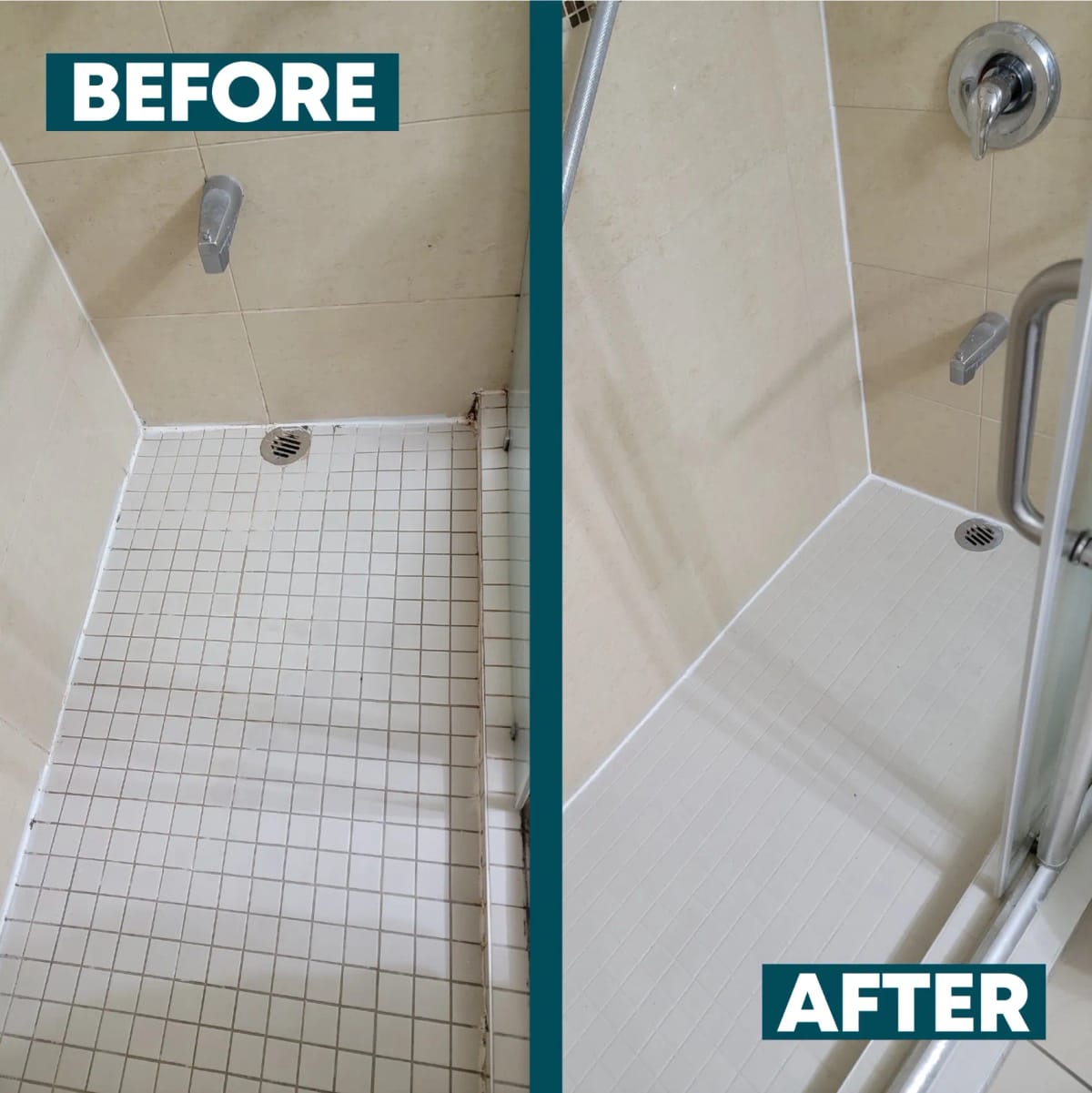
The same reasoning applies to a shower corner. Discolouration on accessible surfaces may respond to appropriate cleaning and treatment, but mould embedded within old silicone generally requires replacement of that silicone. Persistent odours, recurring mould or repeated cracks may point to a moisture or movement issue that surface work alone will not resolve.
3. Choose a material-appropriate cleaning process
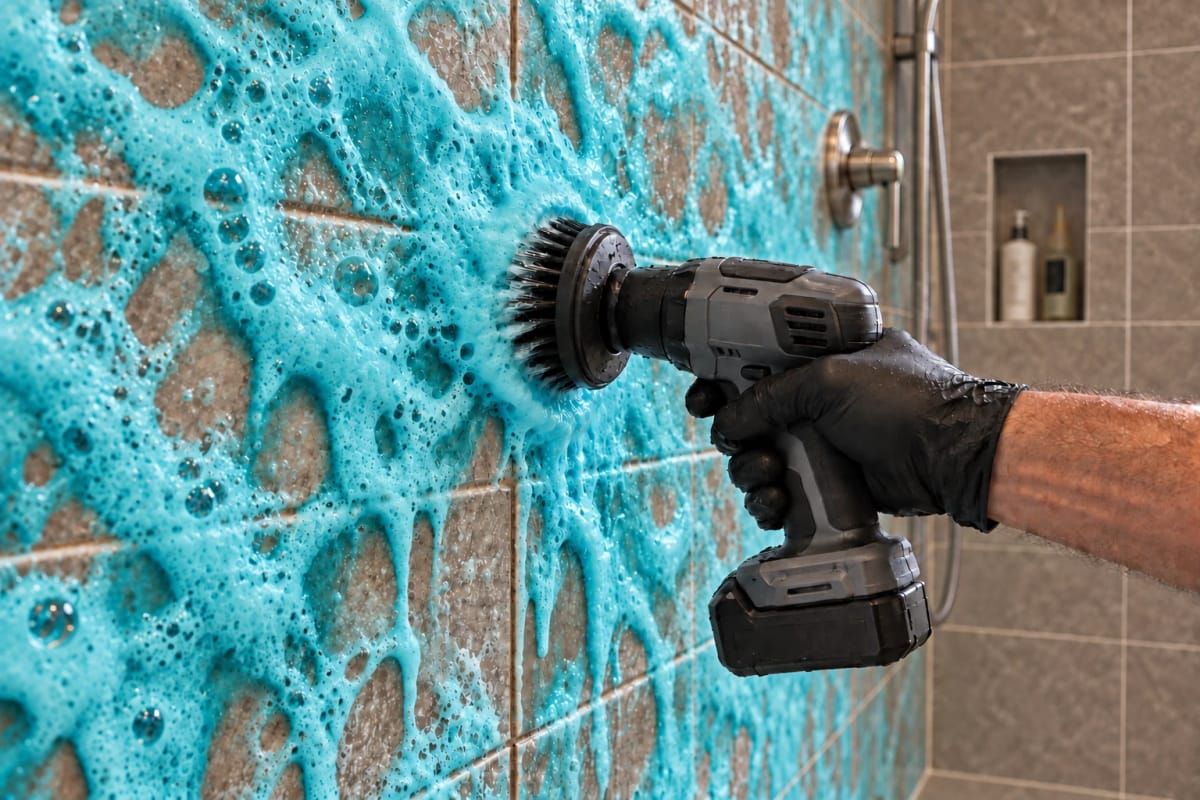
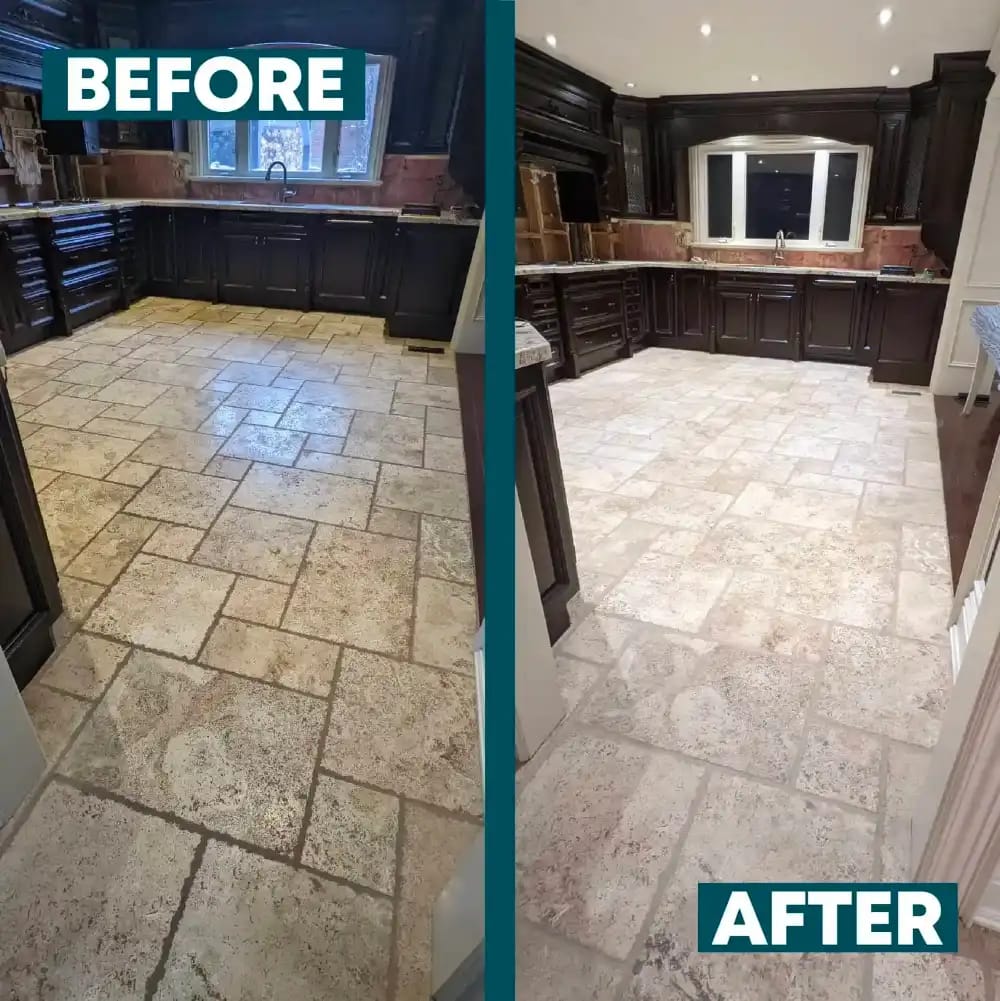
For intact but dirty tile and grout, our cleaning service uses suitable products and machine-powered bristle brushes to lift embedded soil. On a suitable floor, a powered machine can work across grout lines more consistently than routine mopping. Shower cleaning addresses buildup on the surfaces included in the agreed scope, with rinsing and removal of loosened soil.
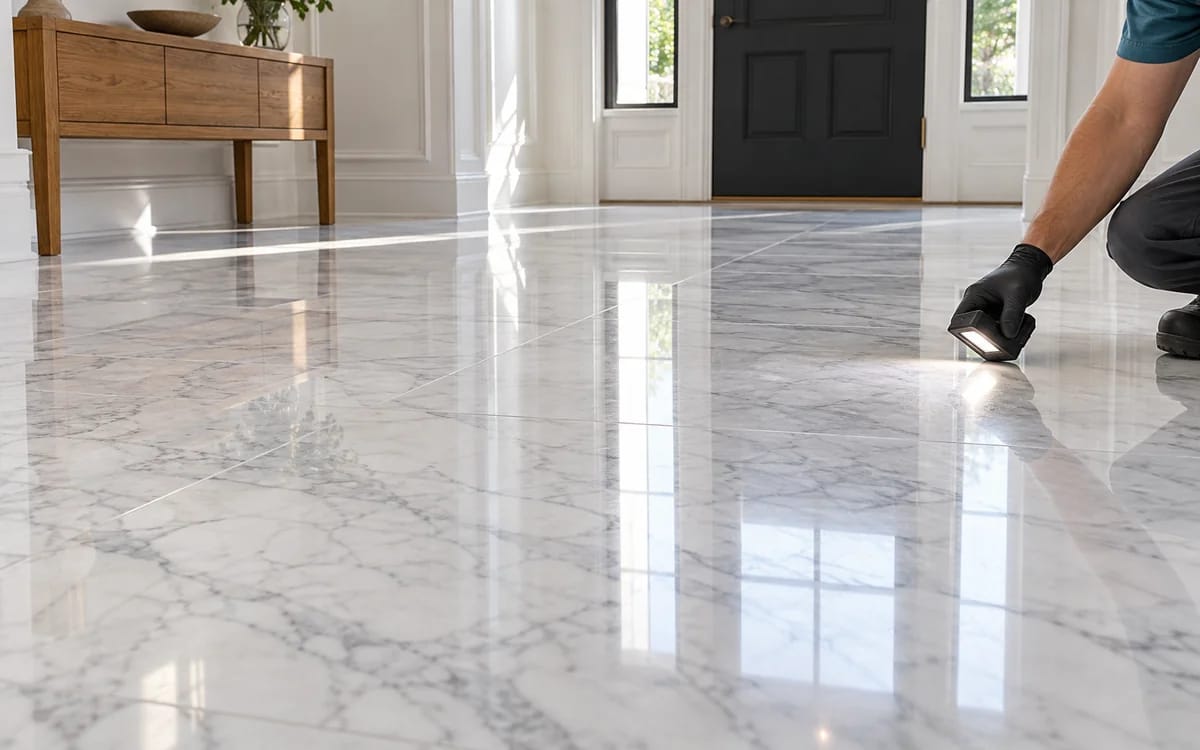
The objective is controlled cleaning, not maximum force. Tool and product selection depend on the material and its condition. For marble floors, our cleaning approach uses stone-safe, acid-free products, extracts dirt from pores and grout, details edges and considers compatible sealing. If the dullness is caused by scratches or acid etching, the recommendation shifts towards honing or polishing rather than a harsher wash.
4. Repair what cleaning cannot fix
If grout has cracks or holes, restoration can address affected lines individually, then apply an appropriate finish where suitable. If caulking has failed, the old material needs to be removed, the joint cleaned and dried, and a new bead installed. A fresh bead is not a fresh start if the failed caulk stays underneath.
This step is particularly important in wet areas. A clean-looking shower can still have gaps that let water reach places it should not. Surface repairs improve the accessible joints in the agreed scope; they do not repair a hidden leak or failed waterproofing behind the tile.
5. Discuss protection and return to use
Clear penetrating sealing may help suitable porous surfaces resist staining while retaining their intended appearance. Grout colour sealing can refresh or change grout colour and improve visual consistency on compatible grout. They are different treatments. Neither should be presented as waterproofing, and not every surface needs sealing.
Preparation and curing belong in the conversation before work begins. Our standard tile and grout cleaning service describes a clear-sealer cure of about four hours without foot traffic. A separate clear-sealing service can require at least 12 hours of drying before application and additional drying afterward. The technician’s instructions for the actual treatment take precedence over a general timeline.
Which service matches the problem you can see?
You do not need to diagnose the installation to ask the right question. Use the visible concern to start the conversation, then let the assessment establish the work.
- Grout is intact but stays dark after mopping: Ask about professional deep cleaning. The goal is to remove embedded soil, not change the grout’s underlying colour.
- Tile looks good, but grout colour is uneven: Ask whether cleaning will be enough or whether colour sealing is appropriate for the existing grout.
- Grout is cracked, pitted or missing: Ask about line-by-line restoration or regrouting where needed. Cleaning can prepare a surface, but it cannot replace missing material.
- Caulk is peeling, gapped or stained within the silicone: Ask whether caulking replacement alone will address the visible problem or whether the surrounding shower also needs restoration.
- Stone is dull, etched or scratched: Ask for a stone-specific assessment. Cleaning removes soil; honing, polishing or resurfacing addresses suitable surface damage.
- Tile and grout were recently installed: Ask whether any compatible protection is appropriate after installation and curing. New does not automatically mean it needs a sealer.
If the main question is whether a cleaning company should also seal grout, our article on grout cleaning and sealing explains what to clarify before accepting that combination. For cracked shower grout alongside deteriorated caulking, read how to compare shower grout repair and caulking replacement.
What can you safely do yourself?
Routine care is reasonable when you know the material and the grout and caulking are sound. Start with the least aggressive method that suits the surface. Remove loose grit first, use a cleaner compatible with the tile or stone, and follow its label for application and rinsing. A soft cloth, suitable non-abrasive sponge or appropriate brush is a better first choice than a harsh pad.
For marble and other acid-sensitive stone, avoid vinegar, lemon, descalers and acidic bathroom cleaners. A pH-neutral stone cleaner is the more appropriate routine choice. Do not treat a cleaning tip for ceramic tile as permission to use the same product on stone, grout, sealers and fixtures.
In showers, remove routine residue and give wet surfaces a chance to dry between uses. Check corners and joints while you clean. If caulk is separating, grout is crumbling or the same visible mould keeps returning, stop trying stronger products and ask what needs repair or further investigation. Do not mix cleaning chemicals or improvise a treatment sequence.
Professional help becomes particularly useful when regular cleaning no longer changes the appearance, the material is uncertain, stone has lost its finish, or the area needs repairs as well as cleaning. The benefit is not simply stronger equipment. It is an assessment that keeps you from spending effort on the wrong problem.
What do actual projects tell us?
Customer experiences show why the scope matters. In a Google review, Francis Hsue described work on a main shower room that included cleaning, sealing and re-caulking. That is a useful example of a result involving several distinct tasks, not proof that a wash alone replaced a failed joint.
Another Google reviewer, Nick G, described a shower restoration in which the tiles shone, grout was filled in and the shower was re-caulked. Those details explain the refreshed appearance more clearly than the word “cleaned” would. For floors, Michele Khandelwal reported work across an entire main floor and four bathrooms and wrote that everything looked brand new again. The reviews describe individual experiences, not a guarantee that every surface will reach the same finish.
What is achievable depends on the starting material. Sound existing tile can often remain in place while grout is cleaned or restored. Scratches, etching, failed joints and hidden moisture problems call for different decisions. Before you buy new tile, get an answer about the tile you already own.
How long does assessment, work and curing take?
There are four separate stages to plan for: contacting us, arranging and completing the assessment, carrying out the agreed work, and waiting for the finish to be ready for use. The booking time depends on location, suitability and availability. Sending an enquiry expresses interest; an appointment is set once the proposed video call or on-site assessment has been arranged and confirmed with you.
For many residential showers, our shower deep-cleaning service describes about half a day of work. Full shower restoration is commonly described as a one-day job, followed by sealer and caulk curing. Caulking replacement alone may take a few hours, with shower use typically resuming the next day, subject to the sealant’s cure. Grout restoration is usually described as a one-day job, followed by treatment-specific curing guidance.
Floor area, buildup, access, grout repairs and the chosen finish all affect the schedule. For a standard clear sealer following tile and grout cleaning, plan on approximately four hours without foot traffic where that treatment applies. Other clear-sealing work can involve longer drying both before and after application. Shower wet-use timing must be confirmed for the products used; a surface looking dry is not the same as a finished cure.
Ask for the work duration and return-to-use instructions in your proposed scope. That makes it easier to plan around a family shower or a floor that connects busy rooms.
What will it cost, and what do you need to do?
There is no useful single price for “clean my tile” when one area has intact grout and another needs repairs or caulking. A quote depends on the area and access, material, buildup, grout and caulking condition, and whether the scope includes cleaning, restoration or a finish. A shower and a large floor are different jobs even if both have tile.
To start an assessment, give us your name and contact details, location, the surface or room, its approximate size, the problem you see and the result you want. Mention any previous sealing, colour treatment or repairs you know about. Clear photos, especially a wide view and close-ups of grout and caulking, help us prepare. They do not always replace a video or on-site review.
After your request, the team follows up to arrange a suitable free video quote or on-site assessment, depending on the project, location and availability. Confirm the appointment details with the team before treating a request as booked. For the review, have the area accessible and be ready to show the places that concern you, including recurring cracks or signs of moisture nearby. The assessment answers what your property needs. The resulting quote sets out the proposed work and its cost. A written-quote request is a request for review and follow-up, not an instant exact price based on a few photos.
Before the work appointment, move toiletries, bath mats, rugs and small movable items out of the work area and make a clear route to it. Tell the technician about known previous treatments and any water showing up in adjacent areas. We handle the equipment, protection of surrounding areas and cleaning, repairs and finishing agreed in the scope. Your main aftercare task is to respect the stated cure time, then use cleaners appropriate to the finished material.
Best practices for a result that stays easier to maintain
- Keep cleaning and repair in their proper order. Removing soil prepares an area for assessment and finishing. Do not assume cleaning can compensate for missing grout.
- Match the finish to the goal. If you like the current grout colour, assess clear protection where compatible. If you want a more consistent grout colour, ask whether colour sealing fits. Neither treatment should be used to conceal a problem that needs repair.
- Give caulking the preparation it needs. Removal, joint cleaning and drying matter when replacing failed material, especially where the joint sees regular water.
- Respect stone’s limits. Sealer may slow absorption on suitable stone, but it does not prevent acid etching or erase scratches.
- Keep an eye on repeated problems. Recurring mould, odours or cracks deserve a closer look. Treating the accessible surface does not establish what is happening behind it.
- Ask how to care for the actual finish. A technician’s curing and cleaning instructions should reflect the products and surfaces used on your job, not a generic bathroom rule.
For more detail on day-to-day care after work is complete, see our guide to keeping bathroom tile and grout cleaner. The aim is a finish you can maintain without having to attack it with a scrub brush every weekend.
Frequently asked questions
Can a professional clean tile and grout without scratching the tile?
That is the aim of a material-appropriate process. The cleaner should identify the tile or stone and select compatible products, tools and pressure rather than use the same aggressive method everywhere. Existing scratches or etching will not disappear through cleaning.
Is steam cleaning always the gentlest option?
No method is automatically right for every surface. Our shower steam cleaning uses vapour, brushes and extraction on suitable areas, but it cannot repair cracked grout or mould embedded inside old silicone. The material and condition still determine whether steam cleaning fits.
Why does my grout look dirty immediately after I scrub it?
It may still hold embedded soil, but darkness can also come from discolouration, pits or missing pieces. Damaged joints can appear uneven even after surface dirt is removed. An assessment can distinguish a cleaning opportunity from a repair or colour-sealing question.
Will clear sealer make my shower waterproof?
No. Clear penetrating sealer can help suitable absorbent surfaces resist staining. It does not waterproof the entire shower assembly, repair hidden leaks or replace failed caulking. Those are separate concerns.
Can you clean over mouldy caulking?
Accessible surface buildup can be treated, but mould embedded within deteriorated silicone generally calls for removal and replacement of that caulking. Covering failed caulk with a new bead can leave the underlying problem in place.
Should I seal every tile floor after cleaning?
No. Sealing depends on the tile and grout material, their condition, any existing treatment and your goal. Clear sealing preserves the intended appearance on compatible surfaces; colour sealing changes or refreshes suitable grout lines. An assessment determines whether either belongs in the proposed scope.
How long before I can use my shower or walk on the floor?
It depends on the work and products. Our standard tile and grout cleaning process describes approximately four hours without foot traffic after its clear sealer. Caulking replacement typically allows shower reuse the next day, subject to the sealant’s cure. A shower with multiple treatments needs job-specific wet-use instructions.
Can photos give me an exact price?
Photos help show the size and visible condition, especially when they include both an overview and close-ups. They may not reveal whether grout is sound, what a finish is made of or why moisture keeps returning. A video or on-site assessment may be needed before the proposed scope and price can be settled.
Start with the surface you have
The right tile and grout cleaner does more than remove visible soil. They distinguish dirt from damage, choose methods suited to the material, explain what protection can and cannot do, and leave you with clear return-to-use and aftercare instructions. That is how you get a refreshed appearance without treating your finish as expendable.
Find out what it actually needs. For a free video quote or on-site assessment with Team Grout in Toronto and the GTA, call +1 289-277-0228 or email info@teamgrout.ca. Tell us which surface is involved, approximately how large it is and what concerns you. We will follow up about a suitable assessment, then explain the proposed work and cost before you decide whether to proceed.