Team Grout can use photos of dirty grout to help prepare for an assessment before you book cleaning or restoration work. In Toronto and the GTA, the practical next step is to request a free video quote or an on-site assessment, depending on the surface, location and appointment availability. Photos can show where the problem is and what needs a closer look, but they do not always replace a live review.
You do not need to decide whether the answer is cleaning, grout repair, colour sealing or new caulking before getting in touch. Send clear photos and a short description of what you see. The assessment helps answer, “What does my property need?” The quote then answers, “What work are you proposing, and what will it cost?” That distinction matters if you want a refreshed appearance without paying for the wrong treatment.
A written-quote request is a request for review and follow-up, not an instant exact price generated from a few images. Think of photos as a useful head start: they let us see the broad condition and prepare better questions, while a video call or visit lets a technician look more closely at the tile, grout and joints.
What does a photo assessment of dirty grout mean?
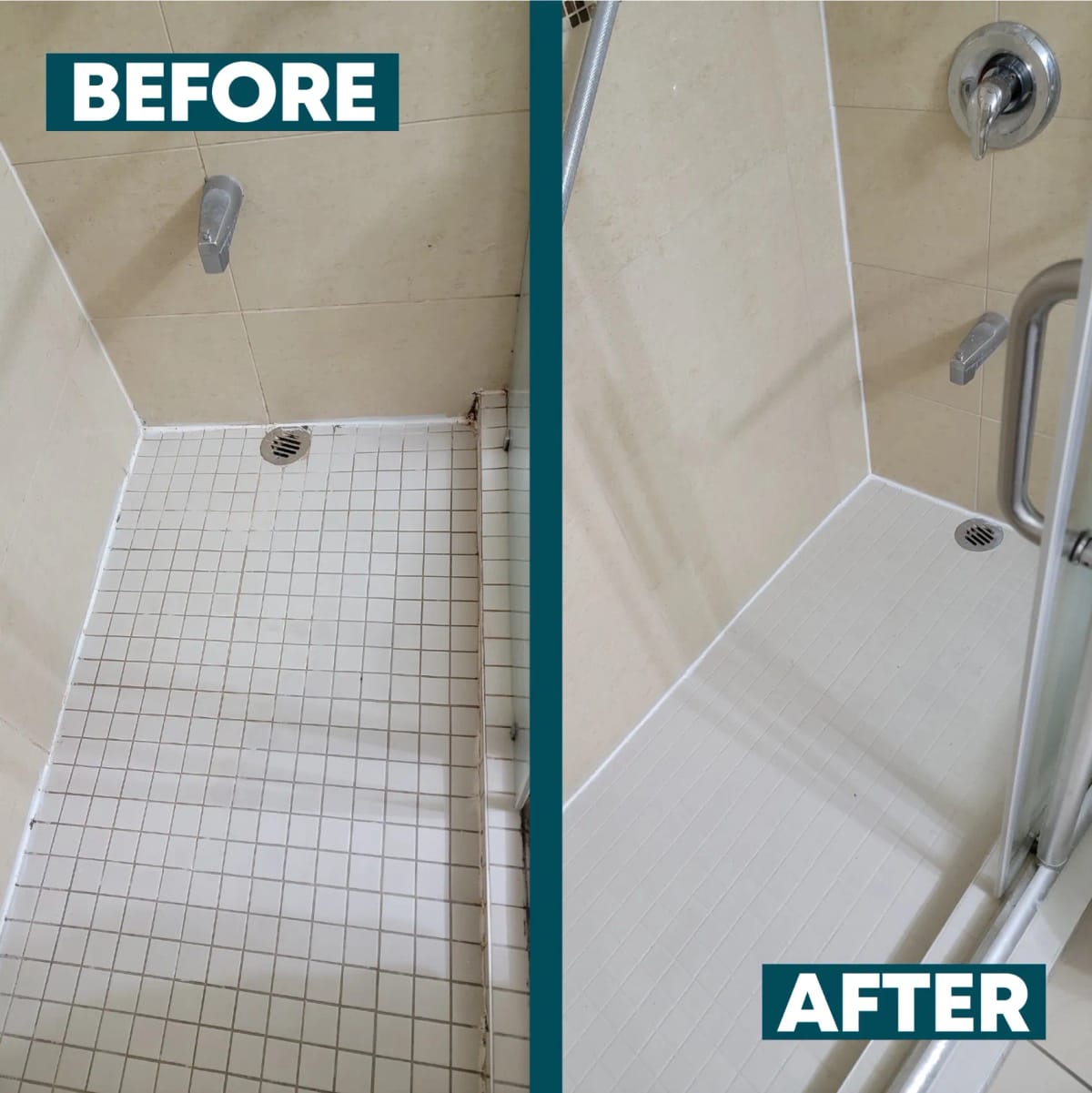
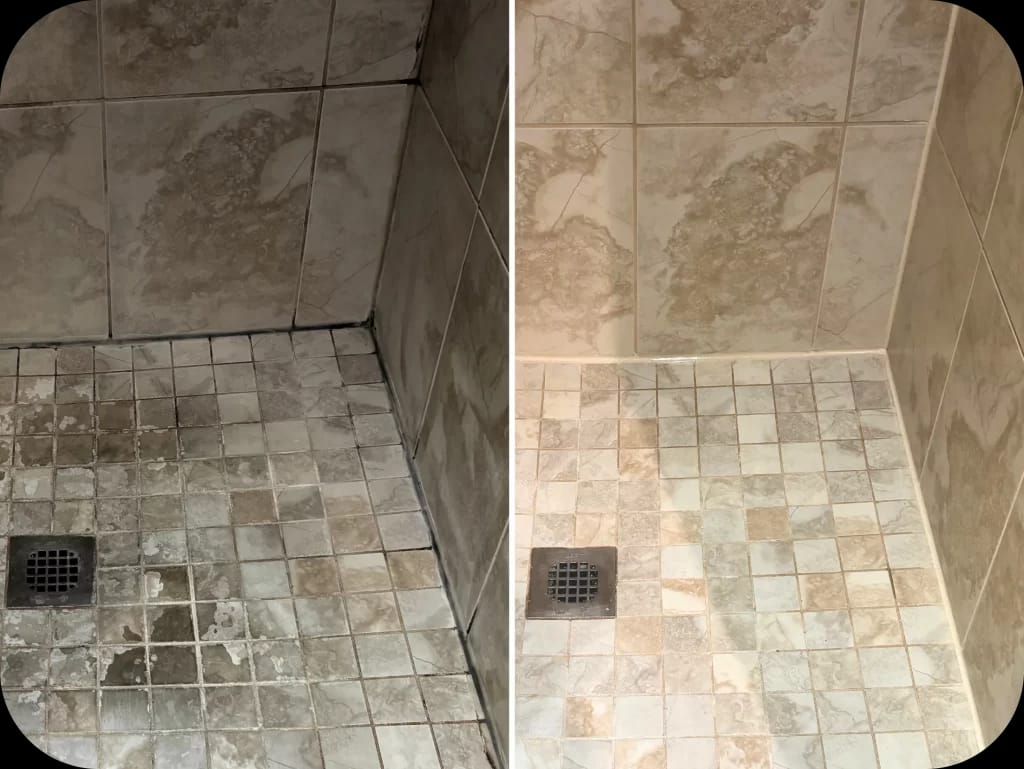
A photo assessment is an initial look at the visible condition of a tiled surface. A wide image may show whether dark grout affects one corner or an entire floor. A close-up may show whether a line is stained, cracked or missing. A photo of the shower perimeter may reveal caulking that has separated from the tub or base.
Those observations help narrow the possibilities, not settle every question. Lighting can change how grout colour appears. A deposit can hide a crack. A photo cannot show whether moisture is trapped behind tile or whether an underlying waterproofing assembly has failed. If an area stays damp, smells persistent, develops recurring cracks or repeatedly shows visible mould, tell the assessor. That history is as useful as the picture.
At Team Grout, the first distinction we make is between surface buildup, damaged material and deteriorated joints. Each calls for different work. The tile may be fine. The grout is stealing the spotlight, but the right response depends on why.
Who should look at the photos?
A tile and grout restoration specialist is a good choice when the question is whether existing surfaces can be cleaned, repaired or protected. Our trained technicians work across tile and grout cleaning, grout restoration, recolouring and sealing, shower restoration, and caulking replacement. That range matters: a company assessing only cleaning may not be considering a cracked grout line or failed caulk that cleaning cannot fix.
A useful reviewer should explain what the images suggest, what remains uncertain and which assessment format fits the property. For example, a clear view of an intact but dirty floor may help prepare a video discussion about deep cleaning and sealing. A shower with separated caulking, loose-looking tile or recurring damp patches may need a closer on-site look or further investigation. Neither situation calls for guessing from a service name alone.
Our recommendation is to request the assessment first, then choose the scope. If you are still deciding between a focused clean and more extensive work, our article on grout cleaning versus full restoration explains the difference in more detail.
How to take photos that help us assess the right work
You do not need professional photography. You need enough context to show the whole area and enough detail to show the grout lines. For services that accept photos with an enquiry, up to five well-chosen images is a useful approach.
1. Start with the whole area
Photograph the full shower, bathroom floor, kitchen floor or backsplash. Include the edges rather than cropping tightly around the darkest patch. A wide view helps us understand the scale, access and location of the affected surface. If two rooms are involved, identify which image belongs to which room.
2. Show the pattern of discolouration
Take a closer view of a representative section, with several tiles and grout lines visible. Is the grout dark everywhere, or mainly along high-traffic paths, near a cooking area or at the shower base? Is the tile itself dull or covered in buildup? Those distinctions help separate a cleaning question from a grout-finish question.
3. Photograph damage at an angle
For cracks, pits or missing grout, take a close-up that still includes the adjacent tile edges. Side lighting can make a recessed line easier to see. If an area looks dark after repeated cleaning, a close-up may show missing material rather than dirt. Our explanation of why stained grout may remain dark after scrubbing is useful if that sounds familiar.
4. Include caulking, not just grout
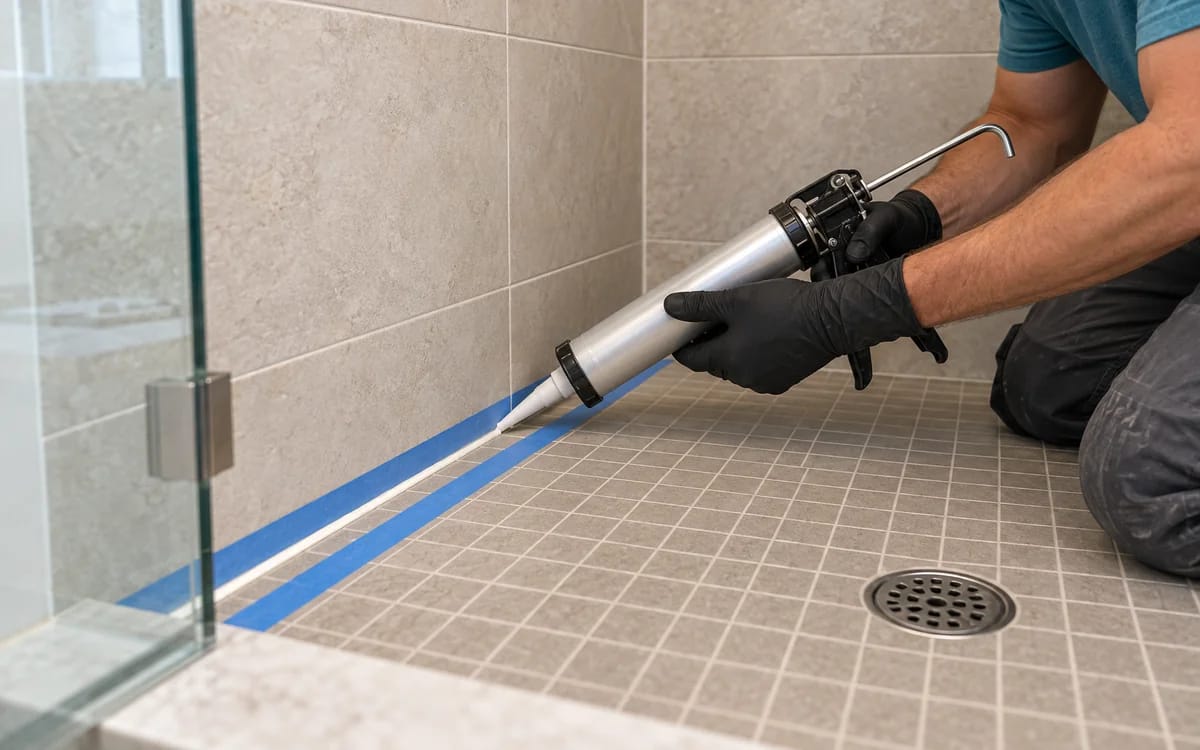
In a shower, capture the vertical corners and the joints where walls meet the tub or shower base. If a bead is peeling, cracked or separated, show both the affected spot and the length of the joint. Caulking is a different material from grout. A fresh bead is not a fresh start if the failed caulk stays underneath.
5. Add a short description
Tell us what regular cleaning has changed, if anything, and whether the concern returns. Mention visible gaps, movement, recurring dampness or a persistent smell. If you know the tile is ceramic, porcelain or natural stone, say so. If you do not know, that is fine: a material you are unsure about should be assessed rather than treated as interchangeable with another surface.
Good lighting helps. Move loose items out of the frame and photograph the area when surface water is not obscuring the grout. There is no need to scrub aggressively or try a stronger chemical just to make the pictures look presentable. We need to see the concern, not a staged version of it.
What information do I need to request an assessment?
To keep the enquiry moving, prepare the details you already know:
- Contact details: Your name, email address and phone number so our team can follow up.
- Location: Your city or neighbourhood, which helps determine assessment options and scheduling.
- Area and size: Whether the concern is a shower, floor or another tiled surface, plus approximate dimensions or square footage if available.
- Visible condition: Dark grout, surface buildup, cracks, missing sections, uneven colour or failed caulking.
- Goal: A cleaner appearance, grout repair, easier maintenance, suitable protection or simply clarity before spending.
- Photos and notes: Wide views and close-ups, with a brief account of what you have already tried.
- Timing: When you hope to have the work assessed and, if appropriate, completed.
The enquiry form offers service, location, quote-type and timing selections, an extra-notes field and file uploads. If you are unsure which service to select, describe the problem in plain language rather than trying to diagnose it. Keep the description you submit handy for the appointment so you can point to the same concern instead of starting the explanation from scratch.
What happens after I send photos?
- We review the enquiry. Photos and notes help identify which surfaces are involved and what the assessor needs to examine more closely. If key details are missing, follow-up can clarify them.
- We arrange a suitable assessment. A free video quote may work when you can show the affected area clearly on a call. An on-site assessment may be better when material, joint condition or extent of damage needs closer inspection. Suitability, location and availability determine the option.
- Confirm the appointment. Submitting an enquiry expresses interest; it is not the same as a confirmed appointment. A team member follows up to arrange the video call or visit. Before making plans around a time, make sure the appointment details have been confirmed with you.
- Show the actual concern. On video, be ready to move the camera from the whole area to the affected grout and caulking. For an on-site visit, provide access to those same areas. Explain which marks return and where water is regularly present.
- Review the proposed work and price. The assessment identifies the likely treatment and any limits. The written quote sets out the proposed scope and cost before you decide whether to proceed.
The assessment and the work appointment are separate decisions. You can ask what the recommended service will address, what it will not address, what preparation is included and when the area can be used again. If an underlying issue appears possible, surface restoration should not be presented as a repair for a hidden leak.
What can the assessment recommend?
“Dirty grout” describes an appearance, not a single cause. We use a simple decision framework: clean what is sound, repair what is damaged, replace what has failed, then consider suitable protection. The order matters. Putting a finish over a problem that needs repair can leave the original problem in place.
Intact grout with embedded dirt: deep cleaning
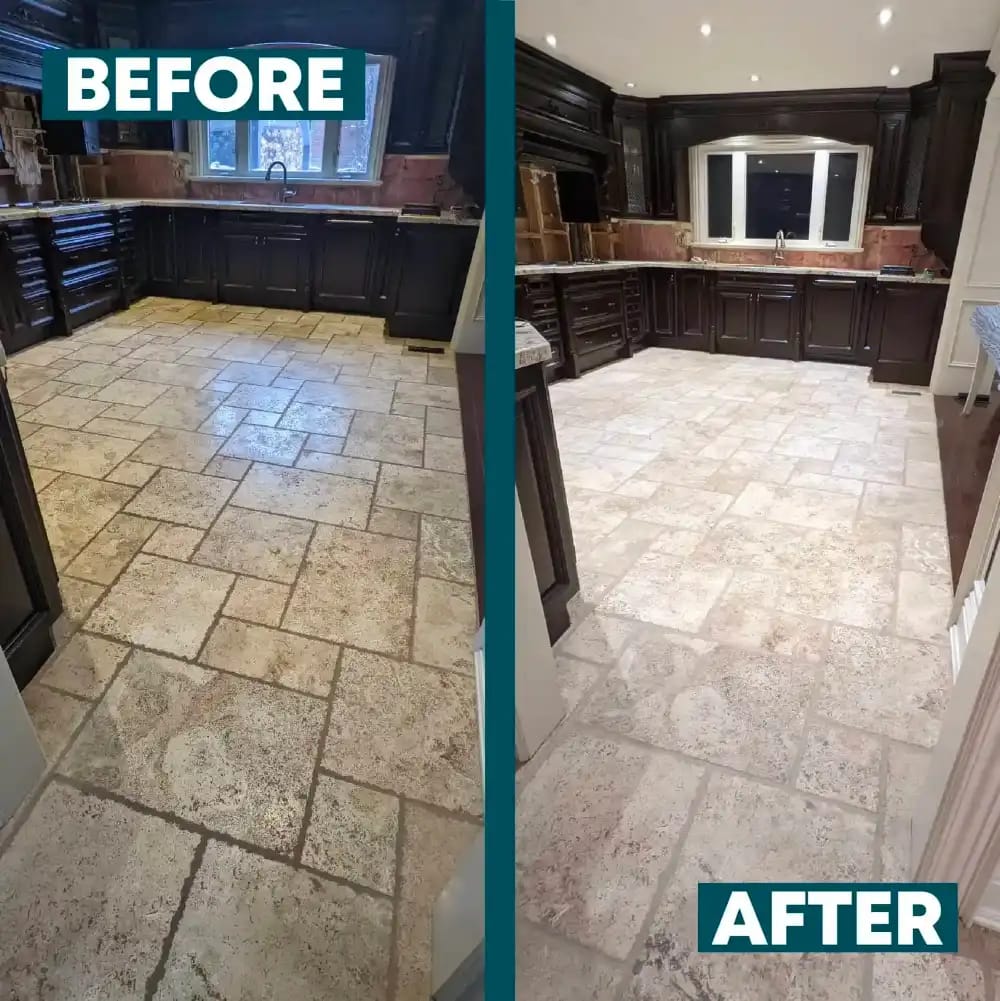
When grout is intact but has accumulated soil, grease or shower buildup, professional cleaning may be the appropriate starting point. For suitable tile floors, our process uses machine-powered bristle brushes and cleaning products chosen for the material. Cleaning can improve the appearance of the tile and grout without replacing sound surfaces. Where included in the agreed treatment, a clear sealer follows cleaning.
A dark line is not proof that the grout needs to be removed. Equally, cleaning cannot fill a missing section. That is why a close-up alongside the wide photo is valuable.
Cracks or missing material: grout restoration
Cracked, pitted or missing grout calls for an assessment of the joints, not another round of mopping. Our grout restoration work can address damaged lines individually, fill appropriate cracks or holes and apply a grout colour sealer. Where the tile remains suitable, restoration can retain it rather than defaulting to tile replacement. Repeated cracking, however, deserves a closer look at why it keeps happening.
Sound grout with uneven colour: colour sealing
Some grout remains visually inconsistent after buildup has been removed. On compatible existing grout, colour sealing can refresh or change the grout colour and create a more consistent finish with stain protection. It is different from cleaning, and it does not replace damaged grout repairs. If your main goal is a more even appearance, say so during the assessment.
A finish you want to keep: clear sealing
Clear penetrating sealing may suit compatible absorbent grout, tile or stone when you like the current appearance and want appropriate stain resistance. It will not hide persistent discolouration, and it is not waterproofing. Not every material needs sealing, so the surface and existing treatment matter.
Peeling or separated joints: caulking replacement
Failed shower caulking is not a grout-cleaning issue. Our caulking service removes the old silicone completely, cleans and dries the exposed joint, then applies and tools a new waterproof, mildew-resistant bead. Covering the old material can trap moisture and compromise the result. If the rest of the tile and grout is sound, a focused caulking replacement may be more appropriate than a full restoration.
Several problems in one shower: combined restoration
A shower with buildup, grout damage and worn caulking may need a combined scope. Restoration can include deep cleaning, treatment of affected accessible surfaces, appropriate grout repairs, colour sealing and removal and replacement of failed caulking. A cleaner appearance is only part of the goal: the floor, tile, grout and joints should each receive the work their condition calls for. Surface work does not establish that hidden mould has been removed or correct failed waterproofing behind the tile.
Can photos tell me what the work will cost?
Photos can help us understand the likely scope, but they are not a reliable price list. Tile and grout cleaning costs depend on the size and type of surface, the amount of buildup, access and the treatment selected. Repairs, grout colour sealing and caulking change the scope. A shower with sound grout and removable deposits is a different job from one with missing grout and separated joints.
We offer free estimates, with written quotes describing the proposed work and price. A written-quote request begins that review; it should not be mistaken for an instant exact figure from limited photos. If you want a fuller explanation of pricing factors before the assessment, read how grout cleaning costs are assessed in Toronto.
When you receive a quote, compare the work underneath the service name. Does it include the floor and shower walls you expected? Will damaged grout be repaired? Is old caulk being removed? Which finish is proposed, and what preparation and drying does it require? Two quotes can have the same heading and describe very different work.
How long should I allow from assessment to using the area again?
There is no single timeline for every dirty-grout enquiry. Photo review and appointment scheduling depend on the details received, the suitable quote format, location and availability. If your concern is a shower or floor, ask about the likely work duration and the curing period. The end of the technician’s visit is not always the moment the area is ready for water or foot traffic.
- Shower deep cleaning: Most residential showers with dirty but sound grout are described as taking about half a day. The technician provides wet-use guidance for the treatment applied.
- Full shower restoration: Most residential showers are described as one-day projects, followed by curing for the selected sealer and caulk. The technician gives the exact reuse time.
- Shower caulking replacement: The work is described as taking a few hours. The shower is typically reusable the next day, subject to the sealant’s cure instructions.
- Grout restoration: It is usually described as a one-day job, with treatment-specific sealer curing guidance afterward.
- Cleaning and clear sealing on suitable floors: Our tile and grout cleaning process states a four-hour clear-sealer cure without foot traffic. Other clear-sealing applications can require different drying and return-to-use periods, so follow the instructions for your actual job.
If the area is your only shower or a main route through the home, tell us during the assessment. That lets the quote and scheduling discussion account for access, drying and return to use rather than leaving you to discover the curing time after the work is finished.
What do I have to prepare, and what do we handle?
For a video call, have your phone ready to show a wide view, then move closer to the grout and joints. Good lighting and access to the problem area are more useful than a perfectly cleaned room. For an on-site assessment, make sure the affected surfaces can be seen. You can move bath mats, toiletries and other loose items that block the floor or shower perimeter.
Before work begins, follow the preparation agreed for your particular service. Tell the technician about previous coatings or cleaners if you know of them. We assess the material and condition, explain the proposed treatment, and carry out the agreed cleaning, repair, sealing or caulking work while protecting surrounding areas. Afterward, follow the specific curing and maintenance instructions rather than applying another product straight away.
For ongoing care, use cleaners suited to the surface. Acidic bathroom cleaners, vinegar and descalers are poor choices for acid-sensitive stone such as marble. Sealing can help suitable porous surfaces resist stains, but it does not make them stain-proof or remove the need for routine care. If grout begins cracking again or caulking separates, report the change rather than simply coating over it.
What do real projects tell us about the likely result?
Homeowner reviews show why matching the work to the condition matters. Nick G described a shower restoration in which the tile was refreshed, grout was filled and the shower was recaulked. That is a combined scope, not evidence that cleaning alone repaired the shower. Cynthia C reported a bathroom deep clean and recaulking, a different combination suited to the work performed there.
For larger tiled areas, Michele Khandelwal reported work on an entire main floor and four bathrooms, saying the surfaces looked new again. Those experiences show the range of surfaces and treatments our technicians have handled. They do not mean every dark grout line will have the same cause or every tile will produce an identical finish. An assessment connects the result you want to the condition of the tile you actually own.
Best practices before accepting a grout quote
- Ask for the service category in plain language. Is the scope cleaning, repair, recolouring, clear sealing, caulking replacement or a combination? You do not need to learn every technical term, but you should know what the work will do.
- Check the preparation. Ask how buildup will be removed, whether damaged grout is included and whether failed caulking will be taken out before a new bead is applied. Preparation affects the finish you see later.
- Confirm the surfaces. A quote for the shower floor is not automatically a quote for the walls, glass, bathroom floor or tub perimeter. List the areas that matter to you.
- Separate protection from waterproofing. Clear sealer helps compatible porous surfaces resist staining. It does not repair a hidden leak or make an entire shower assembly waterproof.
- Get the timing in writing. Confirm the expected work duration, curing guidance, return to foot traffic or shower use, and aftercare for the actual materials chosen.
- Raise recurring symptoms. Repeated mould, persistent smells, moving tile or new cracks may point to a concern beyond surface cleaning. A surface treatment should not be sold as the answer to an unseen cause.
Before you buy new tile, get an answer about the tile you already own. A sound floor may need focused cleaning. A shower may need old caulk removed properly. Getting those details right now can help avoid repeating avoidable surface work later.
Frequently asked questions
Can I send photos before choosing a service?
Yes. Describe what looks dirty or damaged and include wide views and close-ups. Photos help prepare the assessment; you do not need to decide in advance whether cleaning, restoration or caulking replacement is right.
Are photos enough to confirm that grout only needs cleaning?
Sometimes they show helpful clues, particularly whether grout appears intact or visibly cracked. They cannot always establish the material, depth of buildup or condition beneath a deposit. A video or on-site review may still be needed to recommend the scope.
What if I cannot tell whether the dark line is grout or caulking?
Show the whole area and the joint in a close-up. Grout is typically found between tiles, while flexible caulking is used at applicable changes of plane and other joints. The assessor can help identify what you are looking at and which repair question matters.
Can photos reveal mould behind shower tile?
No. They show visible, accessible conditions. Persistent odours, recurring mould or other signs of moisture should be mentioned, but a surface photo cannot establish what is happening behind the tile.
Will a photo submission confirm my appointment?
No. Sending an enquiry starts the review and follow-up. A video call or on-site visit needs to be arranged and confirmed with you before it is an appointment.
Can I get an exact written price without a visit?
A video quote may be suitable for some projects, while others need an on-site assessment. Photos help clarify the enquiry, but an exact price depends on a sufficiently clear understanding of the area, material, condition and work proposed. The written quote should identify both the scope and the price.
Should I scrub the grout before sending pictures?
No special cleaning is needed. Clear away loose items and surface water that block the view, then show the condition that prompted your enquiry. Tell us what you have already tried; the fact that a stain remains after cleaning can help guide the assessment.
Find out what your grout actually needs
If you want clarity before paying for tile and grout work, request an assessment with a few clear photos, your location, the approximate area and a short description of what keeps happening. Our team can help arrange a free video quote or an on-site assessment where suitable, then explain the proposed work and its cost in a written quote. That is the useful next step, not a guess based on one dark grout line.
For a Toronto or GTA property, contact Team Grout at 289-277-0228 or info@teamgrout.ca. We will help you work out whether the existing surface calls for cleaning, restoration, appropriate protection or properly replaced caulking.